P-190. Tick and Flea-Borne Disease Over the Last Twenty Years in the Military
Lauren Sweet, Elena Crouch, John Kiley

TL;DR
This study examines the rise of tick and flea-borne diseases among U.S. military personnel over 20 years, highlighting increasing cases and geographic patterns.
Contribution
The study provides the first detailed analysis of tick and flea-borne disease trends in the U.S. military using the Defense Medical Surveillance System.
Findings
Cases of Babesiosis, Spotted Fever, and Murine Typhus nearly doubled or quadrupled between 2006-2015 and 2016-2024.
Five U.S. states accounted for about half of all reported cases, suggesting regional hotspots for intervention.
Murine Typhus, which is not nationally reportable, showed a significant presence in states like Missouri.
Abstract
The burden of emerging tick and flea-borne disease in the United States (US) is increasing, but the true prevalence remains undefined. Given the military’s frequent field training, these infections have a potential impact on force readiness. Studies evaluating more diverse geographic ranges within the US remain to be conducted, particularly in the military. Here, the Defense Medical Surveillance System (DMSS)—an archive of all clinical data of the DOD serum repository—is evaluated for prevalence and characteristics of various rickettsial diseases diagnosed within the military system. Table 1 Mean cases per year of each disease by decade. SF: Spotted fever; MT: Murine typhus; A/E: Anaplasmosis/Ehrlichiosis; BA: Babesiosis. Note: laboratory data only became available in 2007. *The decade of 2006-2015 had significantly more cases of A/E when compared to decades before or after. Figure…
Genes, proteins, chemicals, diseases, species, mutations and cell lines named across the full text — each resolved to its canonical identifier and authoritative record.
Click any figure to enlarge with its caption.
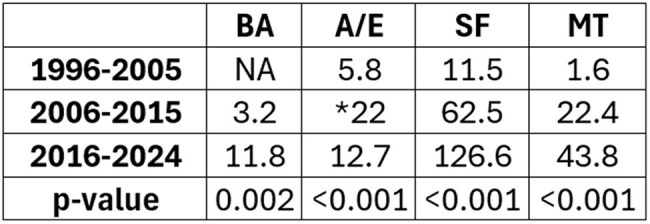 Figure 1
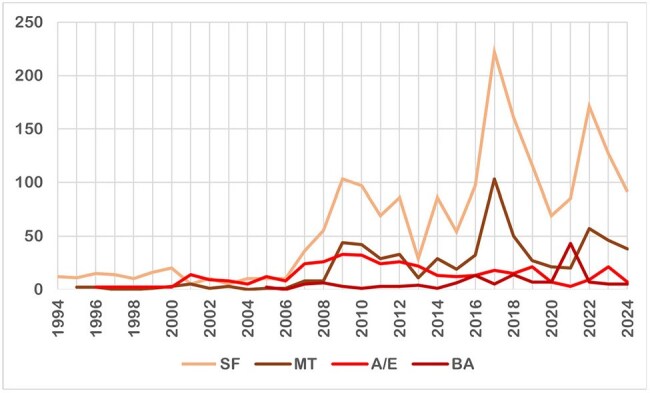 Figure 2
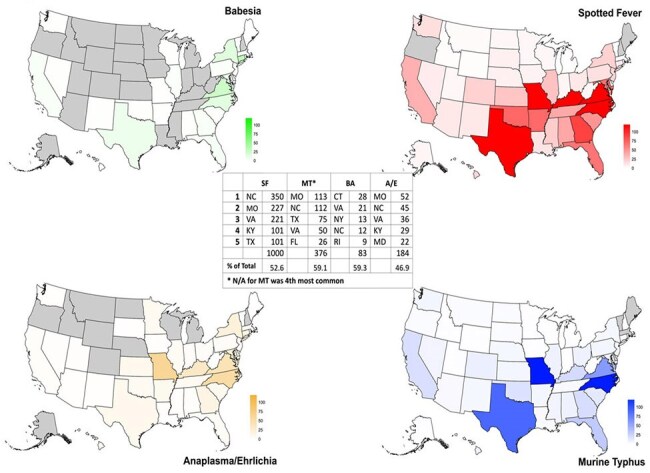 Figure 3
Peer Reviews
No public reviews on file for this paper yet. If you reviewed it on a platform where reviews are public (OpenReview, ICLR, NeurIPS, ICML), you can paste yours below so the community can read it here.
Videos
No videos yet. Explain this paper in a talk, walkthrough, or lecture? Add one.
Taxonomy
TopicsVector-borne infectious diseases · Zoonotic diseases and public health · Viral Infections and Vectors