P-1107. Evaluation of Candidemia and Antifungal Use in ECMO Patients at a Large Volume ECMO Center
Madison D Granger, Rongbing Xie, Owen Albin, Seth Edwards, Joshua Stripling, Todd P McCarty, Rachael A Lee, Jeremey Walker

TL;DR
This study examines candidemia and antifungal use in ECMO patients, finding high rates of infection and antifungal use, with potential for improved diagnostic and treatment strategies.
Contribution
The study provides new insights into candidemia and antifungal use in ECMO patients, emphasizing the role of rapid diagnostics and stewardship opportunities.
Findings
11.9% of ECMO patients had a positive T2C result or blood culture for Candida, with 6% having blood culture-proven candidemia.
Antifungal therapy was used on 21.8% of ECMO run days, with micafungin being the most common agent.
T2C testing showed high concordance with blood culture in confirmed cases but lower concordance in T2C-positive cases.
Abstract
Candida species are a common cause of bloodstream infections in patients receiving Extracorporeal Membrane Oxygenation (ECMO) therapy and a driver of morbidity and mortality. [1, 2]. Risk for candidemia is higher with VV ECMO and duration on ECMO therapy >3 weeks [3]. There is little data describing antifungal use in ECMO or on the use of rapid diagnostic testing with T2Candida (T2C) to identify candidemia in these patients. We conducted a retrospective cohort study of adult patients requiring ECMO from 1/1/2021-12/31/2023. Only the first 30 days of ECMO and first ECMO run was included in the analysis. Candidemia was defined as identification of Candida species in at least 1 culture bottle. Antifungal use was documented over the duration of their ECMO run, or up to 30 days. A total of 403 ECMO patients and 5,660 ECMO days were included. Patient demographics are shown in Table 1. Of…
Genes, proteins, chemicals, diseases, species, mutations and cell lines named across the full text — each resolved to its canonical identifier and authoritative record.
Click any figure to enlarge with its caption.
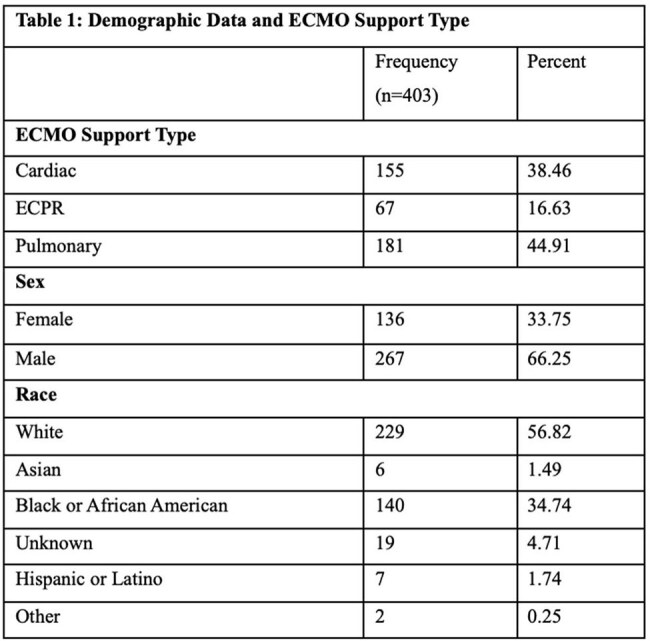 Figure 1
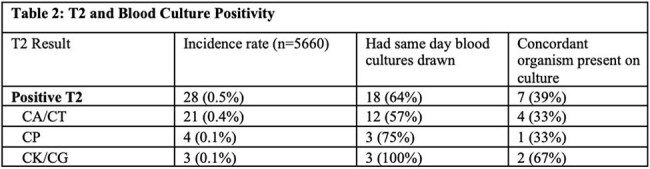 Figure 2
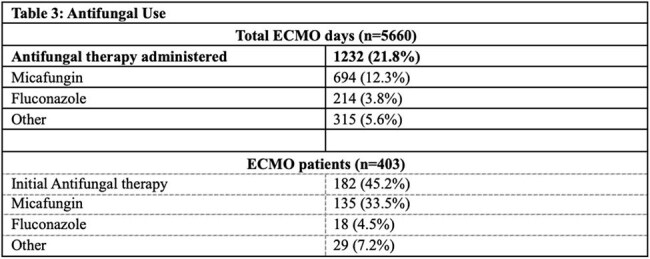 Figure 3
Peer Reviews
No public reviews on file for this paper yet. If you reviewed it on a platform where reviews are public (OpenReview, ICLR, NeurIPS, ICML), you can paste yours below so the community can read it here.
Videos
No videos yet. Explain this paper in a talk, walkthrough, or lecture? Add one.
Taxonomy
TopicsMechanical Circulatory Support Devices · Antifungal resistance and susceptibility · Medical and Biological Ozone Research