P-123. Trends in Streptococcus pneumoniae Associated Meningitis, Pyogenic Arthritis, Septicemia or Pneumonia-Related Mortality in Adults Aged 25 and Above in the United States: An Analysis of Death Certificates Data Between 1999 and 2020
Hamza Asif, Forest W Arnold, Saadia Ashraf

TL;DR
This study analyzed trends in Streptococcus pneumoniae-related deaths in U.S. adults from 1999 to 2020, finding a decline in mortality but persistent disparities in certain groups.
Contribution
The study provides a detailed analysis of mortality trends and geographic disparities in S. pneumoniae-related deaths among U.S. adults over two decades.
Findings
Mortality rates declined sharply from 1999 to 2005 and then gradually until 2020.
Men had higher mortality rates than women, and rural areas had higher rates than urban areas.
Most deaths occurred in hospitals, with significant regional variations observed.
Abstract
Streptococcus pneumoniae is responsible for significant morbidity and mortality. Despite the availability of antibiotics and vaccination, associated mortality remains notable given incomplete vaccination, particularly among adults, and emergence of drug-resistant strains. Tracking the epidemiological trends over time of geographical variations in S. pneumoniae infection-related mortality in adults is relevant. Death certificate data from the CDC WONDER (Centers for Disease Control and Prevention Wide-Ranging Online Data for Epidemiologic Research) database was reviewed between 1999 and 2020 in the United States (U.S.). S. pneumoniae-related deaths due to meningitis, pyogenic arthritis, septicemia, or pneumonia in adults ≥ 25 years were examined using the year 2000 U.S. standard population for age standardization. Mortality rates were expressed as age-adjusted mortality rates (AAMR) per…
Genes, proteins, chemicals, diseases, species, mutations and cell lines named across the full text — each resolved to its canonical identifier and authoritative record.
Click any figure to enlarge with its caption.
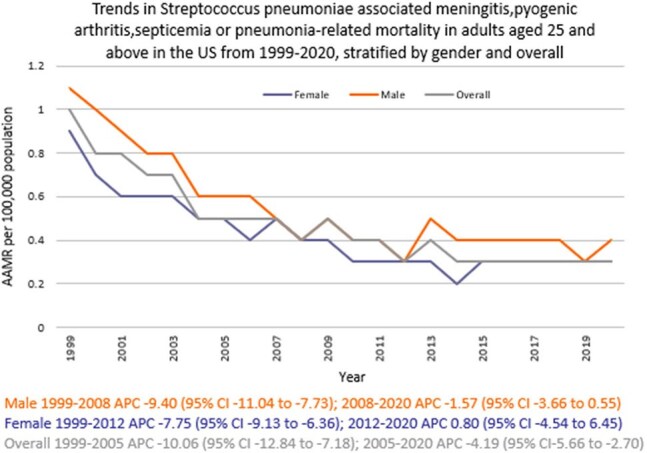 Figure 1
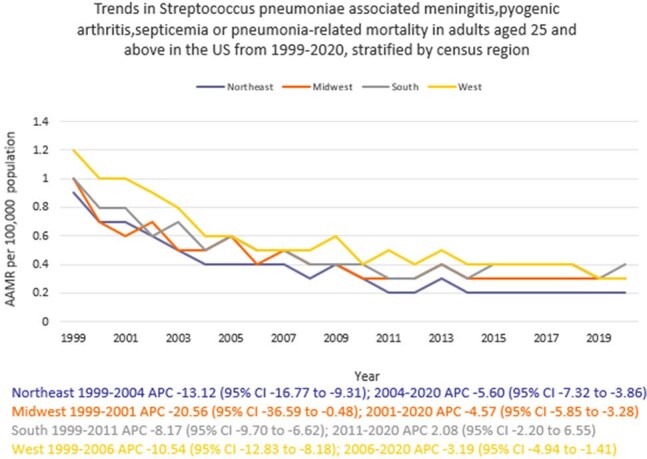 Figure 2
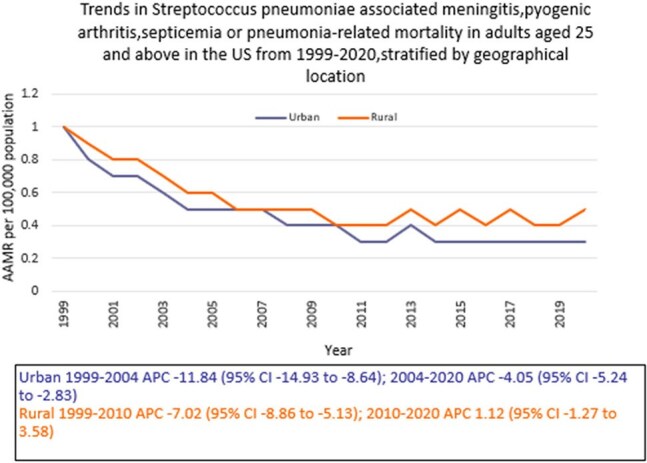 Figure 3
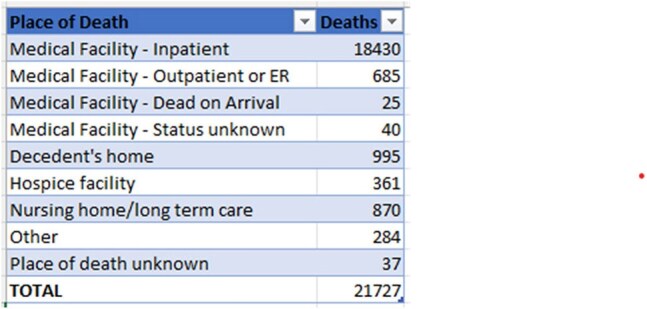 Figure 4
Peer Reviews
No public reviews on file for this paper yet. If you reviewed it on a platform where reviews are public (OpenReview, ICLR, NeurIPS, ICML), you can paste yours below so the community can read it here.
Videos
No videos yet. Explain this paper in a talk, walkthrough, or lecture? Add one.
Taxonomy
TopicsPneumonia and Respiratory Infections · Bacterial Infections and Vaccines · Immune responses and vaccinations