P-1313. A 10-year Trend on Antimicrobial Resistance of Pseudomonas aeruginosa from United States Medical Centers: Results from the INFORM Surveillance Program (2015-2024)
Helio SaderRodrigo E Mendes, John L Lock, Marisa Winkler, Mariana Castanheira

TL;DR
This study analyzed antimicrobial resistance trends in Pseudomonas aeruginosa from US hospitals over 10 years, finding that newer drugs like ceftazidime-avibactam remain effective but resistance is increasing.
Contribution
The paper provides a 10-year surveillance analysis of Pseudomonas aeruginosa resistance patterns in US medical centers, highlighting trends in drug susceptibility and resistance phenotypes.
Findings
Ceftazidime-avibactam and ceftolozane-tazobactam showed high overall susceptibility rates (97.0% and 97.6%) but slight declines over time.
Resistance to older antibiotics like meropenem, levofloxacin, and tobramycin initially increased but then decreased after 2017.
Multidrug-resistant, extensively drug-resistant, and difficult-to-treat isolates showed fluctuating trends, with a resurgence in 2024.
Abstract
P. aeruginosa (PSA) represents an important cause of hospital-associated infection with high rates of antimicrobial resistance and elevated morbidity and mortality. We evaluated the antimicrobial susceptibility of PSA isolates from United States (US) medical centers in the last 10 years.Frequency of Pseudomonas aeruginosa isolates nonsusceptible to selected antimicrobial agentsAbbreviations: CAZ-AVI, ceftazidime-avibactam; TOL-TAZ, ceftolozane-tazobactam; PIP-TAZ, piperacillin-tazobactam; MEM, meropenem; LEV, levofloxacin; TOB, tobramycin.Frequency of isolates with multidrug-resistant (MDR), extensive drug-resistant (XDR), and difficult-to-treat (DTR) phenotypes Frequency of Pseudomonas aeruginosa isolates nonsusceptible to selected antimicrobial agents Abbreviations: CAZ-AVI, ceftazidime-avibactam; TOL-TAZ, ceftolozane-tazobactam; PIP-TAZ, piperacillin-tazobactam; MEM, meropenem;…
Genes, proteins, chemicals, diseases, species, mutations and cell lines named across the full text — each resolved to its canonical identifier and authoritative record.
Click any figure to enlarge with its caption.
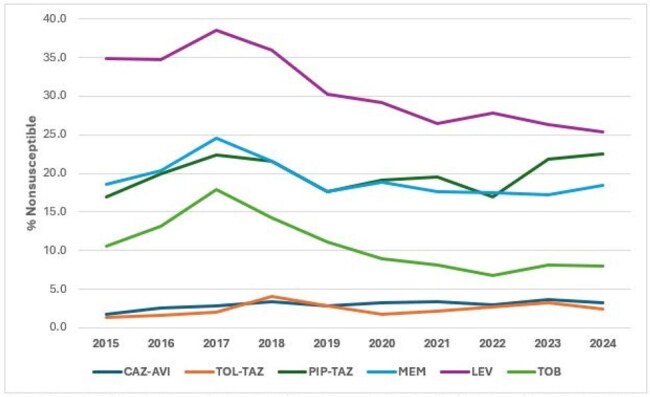 Figure 1
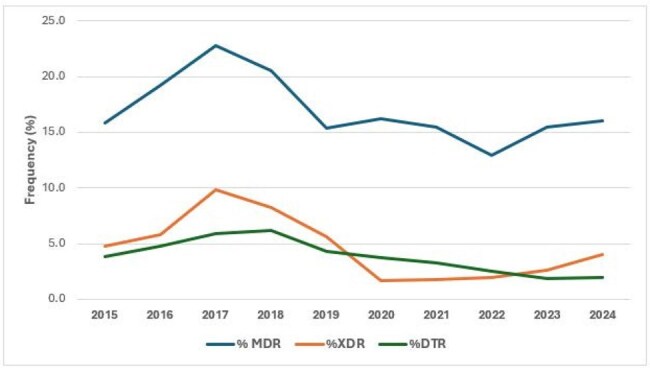 Figure 2
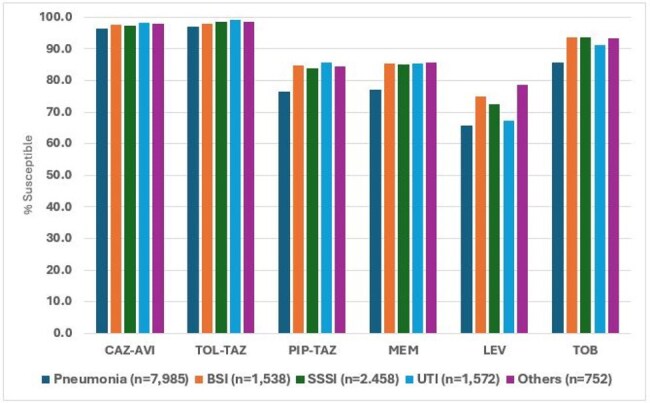 Figure 3
Peer Reviews
No public reviews on file for this paper yet. If you reviewed it on a platform where reviews are public (OpenReview, ICLR, NeurIPS, ICML), you can paste yours below so the community can read it here.
Videos
No videos yet. Explain this paper in a talk, walkthrough, or lecture? Add one.
Taxonomy
TopicsAntibiotic Resistance in Bacteria · Infections and bacterial resistance · Antibiotic Use and Resistance