P-748. Chronic wounds and xylazine exposure among people who use drugs in Baltimore and Washington, DC: prevalence, preferences, and testing methods
Edward C Traver, Onyinyechi Ogbumbadiugha-Weekes, Meredith Zoltick, Claire Tindula, Tina Liu, Sabina Ghale, Meghan Derenoncourt, Miriam Jones, Ashley Davis, Dorcas Salifu, Lydia Mitchell, Meghan F Anderson, Rahwa Eyasu, Emade Ebah, Elana S Rosenthal, Sarah Kattakuzhy

TL;DR
This study examines chronic wounds and xylazine exposure in drug users in Baltimore and Washington, DC, finding that xylazine is common but not directly linked to wounds, and that xylazine test strips have limited effectiveness in urine testing.
Contribution
The study provides new insights into xylazine prevalence among drug users and evaluates the effectiveness of xylazine test strips for urine detection.
Findings
Xylazine was detected in 47% of participants' urine, but wound prevalence was not associated with xylazine exposure.
Xylazine test strips showed high specificity but low sensitivity for detecting xylazine in urine.
Participants with wounds were more knowledgeable about xylazine, despite no direct link between xylazine and wound occurrence.
Abstract
Chronic wounds in people who use drugs (PWUD) are frequently infected and may progress to severe, life-threatening infections. Such wounds may be caused by xylazine, a non-opioid adulterant of illicit fentanyl and avoidance of xylazine may decrease wound incidence and infection. Xylazine test strips (XTS, BTNX Inc.) are commercially available to check illicit drugs for xylazine, but more data is needed on xylazine prevalence and knowledge among PWUD, and it is unknown if XTS can be used to detect xylazine in urine.Table 1Demographics and Risk Factors for Lifetime Wounds. IDU, injection drug use; LC-MS, liquid chromatography-mass spectroscopy; XTS, xylazine test strip.Table 2Knowledge and Attitudes towards Xylazine, Wounds, Drug Checking, and Urine Xylazine Testing. Demographics and Risk Factors for Lifetime Wounds. IDU, injection drug use; LC-MS, liquid chromatography-mass…
Genes, proteins, chemicals, diseases, species, mutations and cell lines named across the full text — each resolved to its canonical identifier and authoritative record.
Click any figure to enlarge with its caption.
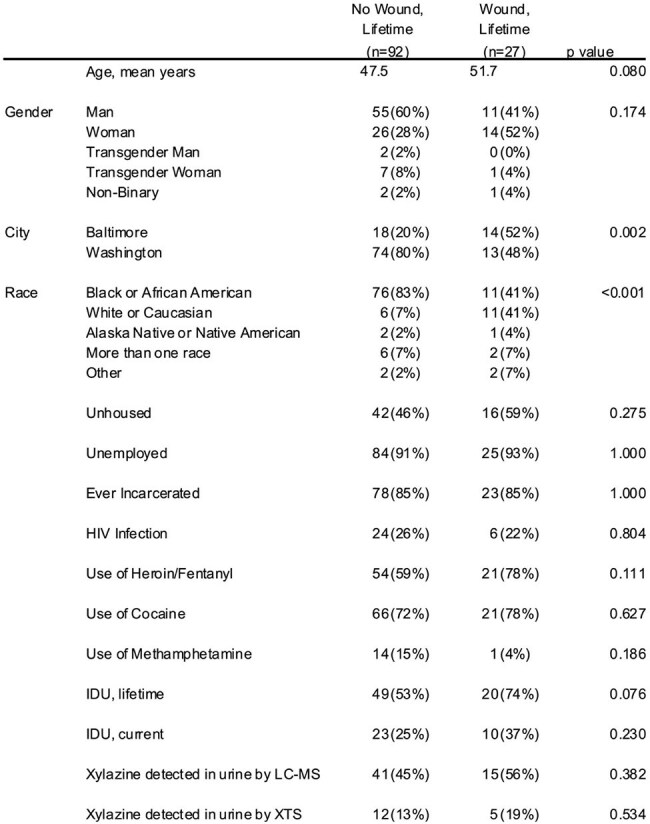 Figure 1
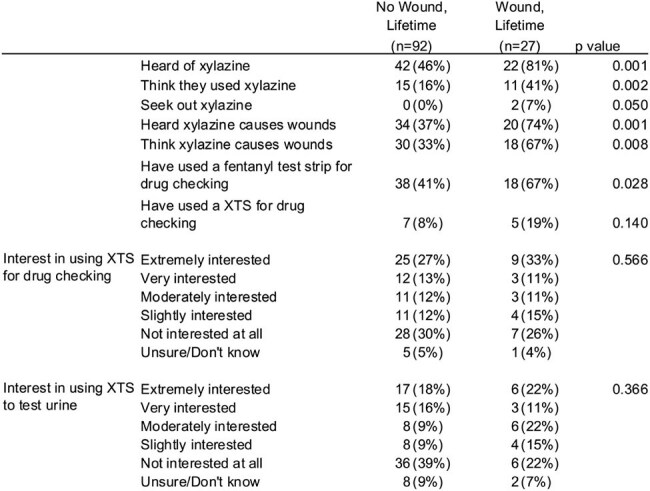 Figure 2
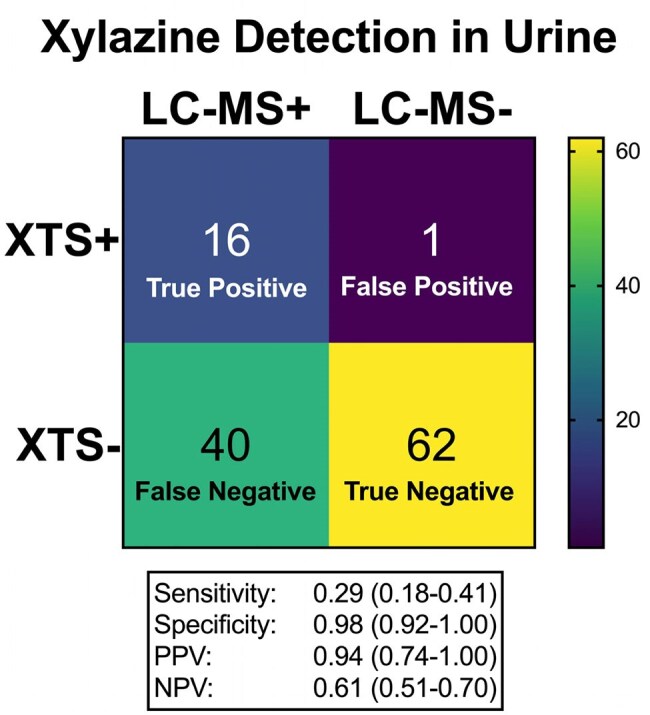 Figure 3
Peer Reviews
No public reviews on file for this paper yet. If you reviewed it on a platform where reviews are public (OpenReview, ICLR, NeurIPS, ICML), you can paste yours below so the community can read it here.
Videos
No videos yet. Explain this paper in a talk, walkthrough, or lecture? Add one.
Taxonomy
TopicsOpioid Use Disorder Treatment · Forensic Toxicology and Drug Analysis · HIV, Drug Use, Sexual Risk