P-1102. Educating patient caregivers on hand hygiene: A key step in reducing health care-associated infections
Md Shariful Amin Sumon, Golam Dostogir Harun

TL;DR
Educating caregivers on hand hygiene significantly improves infection control in hospitals.
Contribution
A targeted infection control intervention improved caregivers' hand hygiene compliance and related practices.
Findings
Hand hygiene compliance increased from 5.9% to 16.8% after the intervention.
Caregivers improved waste management and patient file handling practices.
Self-purchase of sanitizer bottles increased from 7.7% to 11.2%.
Abstract
Inadequate hygiene compliance among patients’ caregivers could significantly increases the burden of healthcare-associated infections. Strengthening caregivers’ understanding of hygiene management is essential for their active participation in reducing transmission risks during patient care. This study examined the efficacy of an infection control intervention to improve hand hygiene (HH) practices among caregivers.Changes in caregivers’ hand hygiene complianceImpact of Hand Hygiene Intervention among patient's caregivers Changes in caregivers’ hand hygiene compliance Impact of Hand Hygiene Intervention among patient's caregivers From July to September 2024, we conducted a pre-post-intervention evaluation at four tertiary hospitals in Bangladesh. The intervention package comprised informative messages regarding the use of sanitizer and soap for HH, disposal of medical wastes,…
Click any figure to enlarge with its caption.
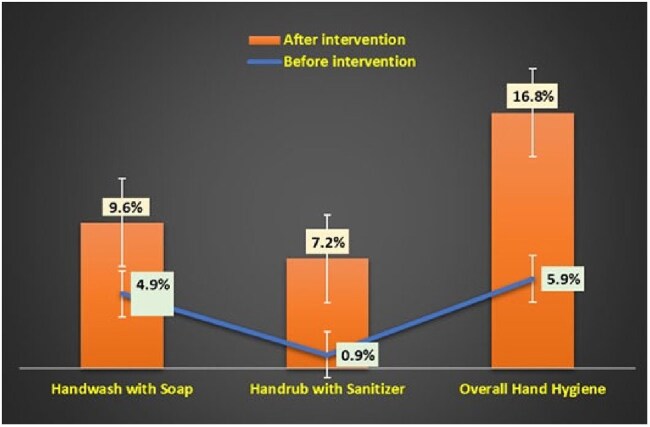 Figure 1
Peer Reviews
No public reviews on file for this paper yet. If you reviewed it on a platform where reviews are public (OpenReview, ICLR, NeurIPS, ICML), you can paste yours below so the community can read it here.
Videos
No videos yet. Explain this paper in a talk, walkthrough, or lecture? Add one.
Taxonomy
TopicsInfection Control in Healthcare · Nosocomial Infections in ICU · Dental Research and COVID-19