P-1539. Staphylococcus aureus clinical isolates display staphylothrombin activity patterns corresponding to sequence type
Jordan Kim, Brooke M Talbot, Sarah W Satola, Michael Z David, Timothy D Read, Gregory L Damhorst

TL;DR
The study shows that different Staphylococcus aureus strains form blood clots in ways that depend on their genetic makeup, which could help in treating infections.
Contribution
The study introduces a new assay to measure clot formation by S. aureus strains and links genetic types to clotting behavior in human plasma.
Findings
ST8 and ST5 S. aureus strains show distinct fibrin formation patterns in different human plasmas.
Genetic factors within sequence types influence staphylothrombin activity in human hosts.
NARSA reference strains like ST30 and ST36 show consistent reactivity across plasma specimens.
Abstract
Staphylococcus aureus is a leading cause of bacterial infections globally, which range from relatively benign tissue and skin infections to severe bloodstream and intravascular infections. A prominent virulence and survival factor of many Staphylococcus species is the ability to form thrombi in blood via the conversion of fibrinogen to fibrin using prothrombin-activating proteins. We previously created an assay to measure this phenomenon in vitro. Our objective here was to compare fibrin formation phenotypes across common S. aureus multilocus sequence types (STs) using laboratory and clinical strains.Table 1:Staphylococcus aureus strains used in Staphylothrombin activity and Growth fitness Assay (STGA)List of all 32 S. aureus strains used in STGA experiments including the following: Source of isolate, MLST, and the institution the isolate was received from.Figure 1:Heatmap of plasma…
Genes, proteins, chemicals, diseases, species, mutations and cell lines named across the full text — each resolved to its canonical identifier and authoritative record.
Click any figure to enlarge with its caption.
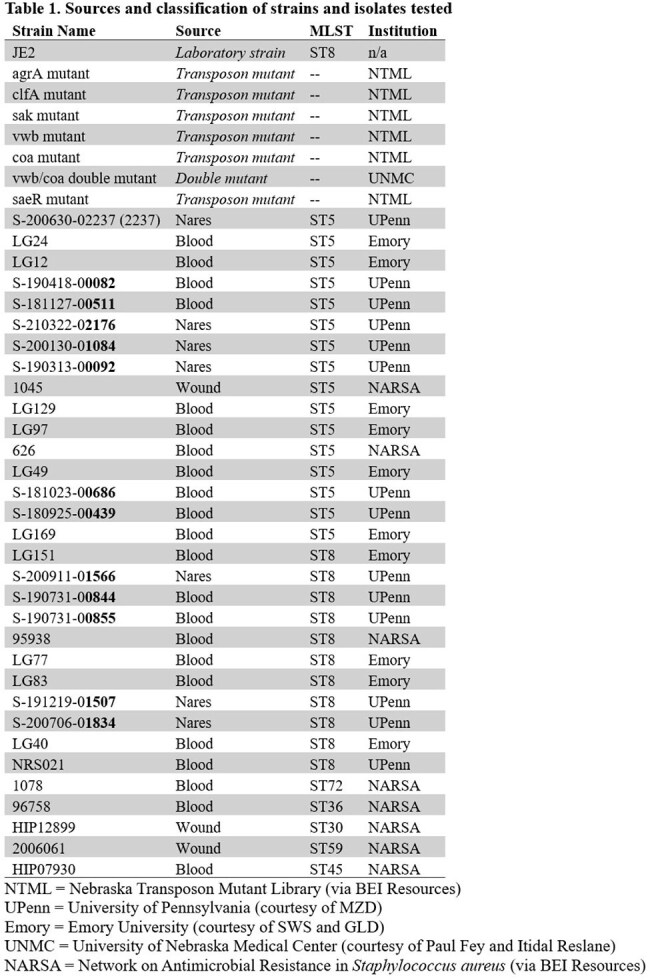 Figure 1
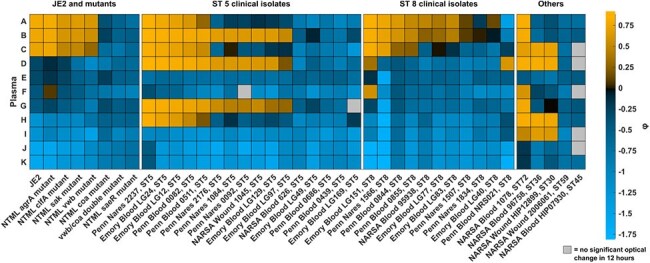 Figure 2
Peer Reviews
No public reviews on file for this paper yet. If you reviewed it on a platform where reviews are public (OpenReview, ICLR, NeurIPS, ICML), you can paste yours below so the community can read it here.
Videos
No videos yet. Explain this paper in a talk, walkthrough, or lecture? Add one.
Taxonomy
TopicsAntimicrobial Resistance in Staphylococcus · Bacterial biofilms and quorum sensing · Biochemical and Structural Characterization