P-283. Evaluating Missed Opportunities for HIV Diagnosis in a Statewide Health System
Timothy C Adkins, Nicole Bryan, Jesse M Thompson

TL;DR
This study examines missed chances to diagnose HIV early in a West Virginia health system, focusing on rural and emergency care settings.
Contribution
The study identifies patterns of missed HIV diagnosis opportunities in a statewide health system, particularly in rural and emergency care settings.
Findings
21 out of 101 patients had two or more healthcare encounters before HIV diagnosis.
Emergency Departments were the most common setting for these pre-diagnosis encounters.
No single risk factor significantly influenced the number of healthcare encounters prior to diagnosis.
Abstract
HIV is an ongoing public health burden which can be controlled with interventions such as ART. In recent years, outbreaks of HIV infection have occurred related to the opioid epidemic. Inconsistencies in screening high risk patients in rural communities at health care encounters may lead to delays in care, more opportunistic infections, and further HIV transmission. Addressing screening disparities in rural communities can improve patient outcomes and reduce future outbreaks. WVU Medicine is the largest health system in WV and includes 25 hospitals located throughout the state. This study retrospectively examines 101 recently diagnosed HIV patients who received care at WVU Medicine for patterns in missed opportunities for early HIV diagnosis.Table 1Demographic Information, by FactorTable 2Patient Characteristics of Individuals who had 2 or More Pre-Diagnosis Encounters Compared to Those…
Click any figure to enlarge with its caption.
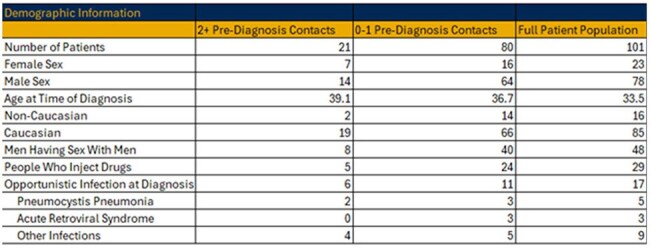 Figure 1
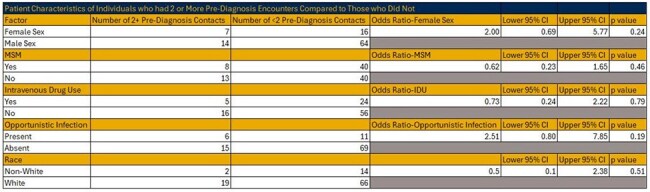 Figure 2
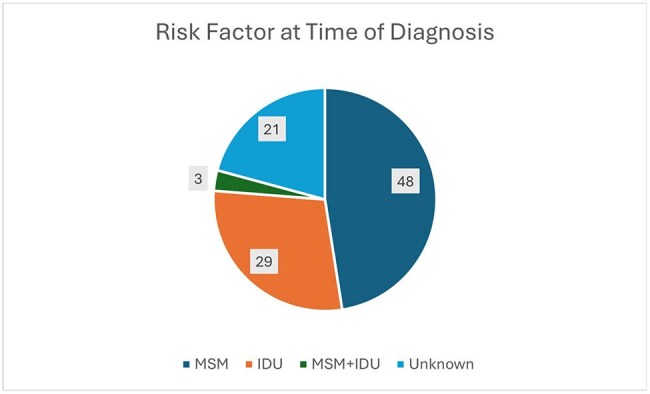 Figure 3
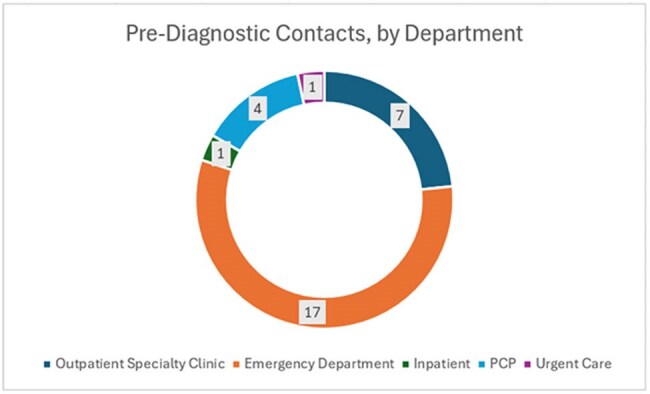 Figure 4
Peer Reviews
No public reviews on file for this paper yet. If you reviewed it on a platform where reviews are public (OpenReview, ICLR, NeurIPS, ICML), you can paste yours below so the community can read it here.
Videos
No videos yet. Explain this paper in a talk, walkthrough, or lecture? Add one.
Taxonomy
TopicsHIV/AIDS Research and Interventions · Data-Driven Disease Surveillance · HIV, Drug Use, Sexual Risk