P-1053. Impact of Chlorhexidine Gluconate (CHG) Bathing on Bloodstream Infection Rates in Hematology-Oncology and Hematopoietic Stem Cell Transplant (HO/HSCT) Units
Yoona Rhee, Jae Jung, Michael Schoeny, Erik R Dubberke, Scott Fridkin, Erin Gettler, Surbhi Leekha, David K Warren, Matthew J Ziegler, Alexandra Seguin, Laura Rusie, Mary K Hayden, Michael Y Lin

TL;DR
This study found that using chlorhexidine gluconate (CHG) bathing in hematology-oncology units significantly reduced central line-associated bloodstream infections.
Contribution
The study provides new evidence on the effectiveness of CHG bathing in reducing CLABSIs in high-risk hematology-oncology and stem cell transplant units.
Findings
After CHG bathing implementation, CLABSI rates decreased significantly by 35% after adjusting for confounding factors.
Unadjusted CLABSI rates dropped from 1.85 to 1.48 per 1,000 central line days.
MBI-LCBI rates increased slightly but were not significantly affected by CHG bathing.
Abstract
Patients with hematologic malignancies are at high risk for healthcare-associated infections due to factors such as central lines and chemotherapy-associated mucosal barrier injury. In the intensive care unit, routine CHG bathing of patients reduces the risk of central line-associated bloodstream infections (CLABSIs); however, the impact of CHG in HO/HSCT units is less known.Figure 1.Modeled Central Line-associated Bloodstream Infection Rates Before and After Routine Chlorhexidine Gluconate Bathing Implementation in Hematology-Oncology/Hematopoietic Stem Cell Transplant Units from Six HospitalsTable 1.Modeled Incidence Rate Ratios of Bloodstream Infection Classes After Routine Chlorhexidine Gluconate Bathing Implementation in Hematology-Oncology/Hematopoietic Stem Cell Transplant Units from Six Hospitals Modeled Central Line-associated Bloodstream Infection Rates Before and After…
Genes, proteins, chemicals, diseases, species, mutations and cell lines named across the full text — each resolved to its canonical identifier and authoritative record.
Click any figure to enlarge with its caption.
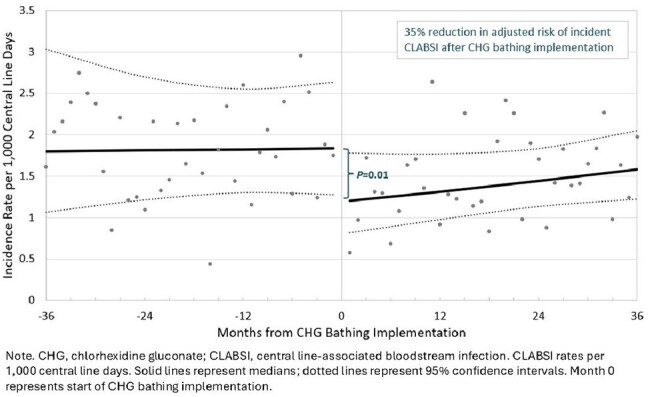 Figure 1
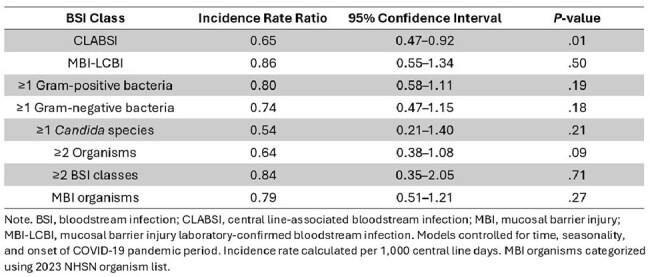 Figure 2
Peer Reviews
No public reviews on file for this paper yet. If you reviewed it on a platform where reviews are public (OpenReview, ICLR, NeurIPS, ICML), you can paste yours below so the community can read it here.
Videos
No videos yet. Explain this paper in a talk, walkthrough, or lecture? Add one.
Taxonomy
TopicsCentral Venous Catheters and Hemodialysis · Neutropenia and Cancer Infections · Medical Device Sterilization and Disinfection