P-1009. What Can We Learn from Bezlotoxumab: A Retrospective Evaluation of Practice Patterns
Jacob Denkins, HaYoung Ryu, Amber C Streifel, Jim Lewis

TL;DR
This study shows that most high-risk patients with recurrent C. difficile infection did not receive a preventive treatment, leading to higher recurrence rates and healthcare costs.
Contribution
The study highlights missed opportunities in using bezlotoxumab and suggests ways to improve future microbiota-based therapies for preventing recurrent C. difficile infection.
Findings
81.3% of highest-risk patients did not receive bezlotoxumab.
Recurrence rates were 46.2% in non-BEZ patients versus 26.1% in BEZ recipients.
Treating all high-risk patients could have saved an estimated $430,000 in healthcare costs.
Abstract
BEZ is a monoclonal antibody recommended as adjunctive therapy for prevention of recurrent Clostridioides difficile infection (rCDI). The greatest reduction in recurrence and 30-day hospitalization is observed in patients with rCDI and ≥ 2 risk factors (age ≥65, immunosuppression, severe CDI). Although BEZ was withdrawn from the market, lessons learned from it may inform future tools to guide the use of microbiota-based therapies in preventing rCDI.Patient Inclusion Flow DiagramPatient screening and inclusion flow diagram. Of 1,776 patients with laboratory-confirmed C. difficile, 155 met criteria for BEZ eligibility after exclusions.Baseline CharacteristicsBaseline characteristics of 155 patients eligible for bezlotoxumab (BEZ). Includes demographics, high-risk criteria for recurrent CDI, and treatment regimens for first and second CDI episodes. Patient Inclusion Flow Diagram Patient…
Genes, proteins, chemicals, diseases, species, mutations and cell lines named across the full text — each resolved to its canonical identifier and authoritative record.
Click any figure to enlarge with its caption.
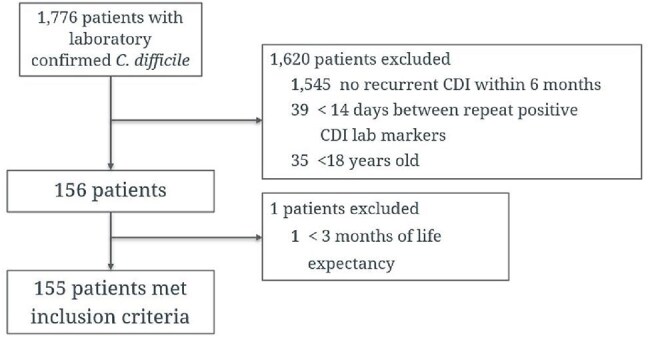 Figure 1
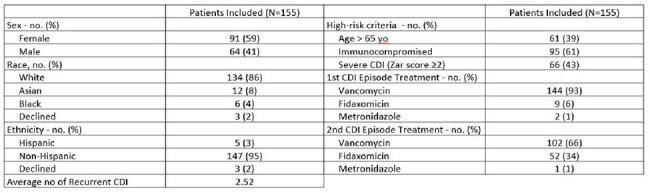 Figure 2
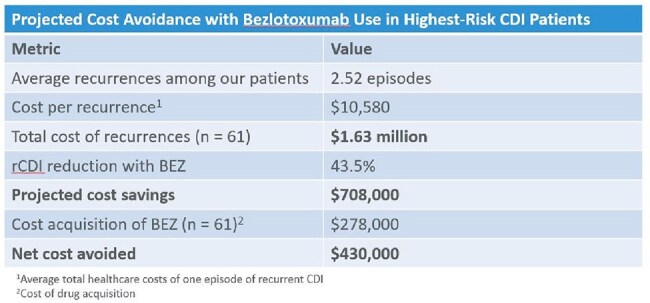 Figure 3
Peer Reviews
No public reviews on file for this paper yet. If you reviewed it on a platform where reviews are public (OpenReview, ICLR, NeurIPS, ICML), you can paste yours below so the community can read it here.
Videos
No videos yet. Explain this paper in a talk, walkthrough, or lecture? Add one.
Taxonomy
TopicsClostridium difficile and Clostridium perfringens research · Microscopic Colitis · Spondyloarthritis Studies and Treatments