P-708. Clinical characteristics and outcomes among critically ill children aged 8 to 24 months with RSV lower respiratory tract infection by nirsevimab eligibility status – October 2023 – April 2025
Laura D Zambrano, Margaret M Newhams, Regina Simeone, Amanda B Payne, Amber Orzel-Lockwood, Natasha B Halasa, Jemima Calixte, Katherine N Lindsey, Angela P Campbell, Adrienne G Randolph

TL;DR
The study examines the clinical features and outcomes of critically ill children aged 8 to 24 months with RSV infection, focusing on those eligible for nirsevimab treatment.
Contribution
The study provides insights into the proportion of nirsevimab-eligible children and the characteristics of those who are not eligible.
Findings
Only 6% of 482 children met nirsevimab eligibility criteria, primarily due to bronchopulmonary dysplasia.
34% of ineligible children had underlying conditions like cardiac or neurologic disorders.
Most children with severe RSV-LRTI were ineligible for nirsevimab despite requiring ICU care.
Abstract
RSV is the leading cause of infant hospitalization, and some children with underlying conditions are at increased risk of severe RSV during their 2nd RSV season. The Advisory Committee on Immunization Practices recommends nirsevimab for U.S. children in their 2nd season with specified risk factors (Table 1). Criteria for 2nd season eligibility vary by country. Our objectives were 1) to understand the proportion of nirsevimab-eligible children and 2) to describe underlying conditions and outcomes among those not eligible in a cohort of U.S. children with severe RSV lower respiratory tract infection (LRTI). We enrolled children aged 8−24 months hospitalized across 28 hospitals in 24 states with severe RSV LRTI during their 2nd RSV season during October 30, 2023–April 12, 2024, and October 1, 2024–March 31, 2025. Analytic inclusion required 1) admission to the ICU for ≥24 hours and 2)…
Genes, proteins, chemicals, diseases, species, mutations and cell lines named across the full text — each resolved to its canonical identifier and authoritative record.
Click any figure to enlarge with its caption.
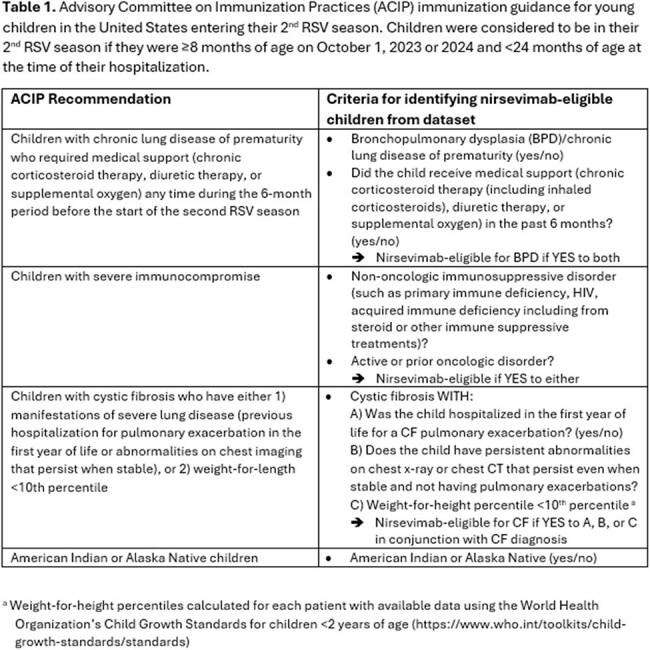 Figure 1
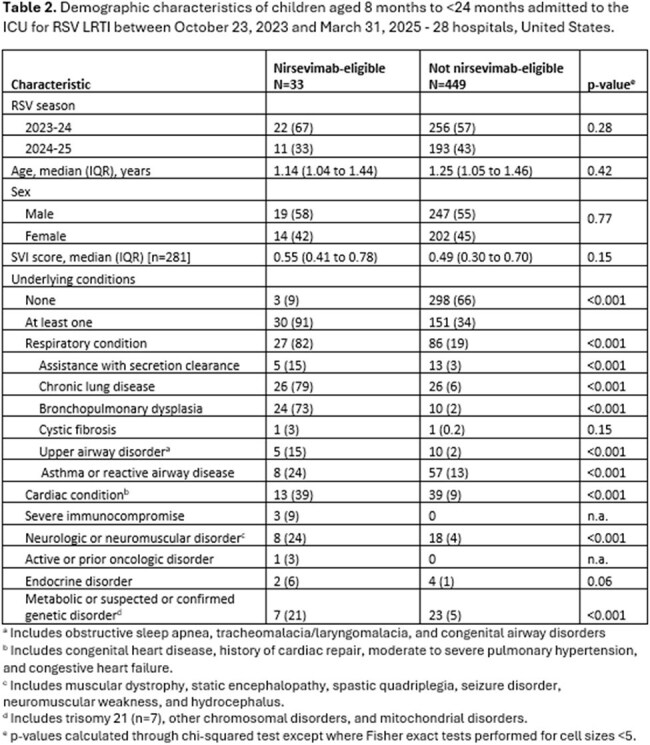 Figure 2
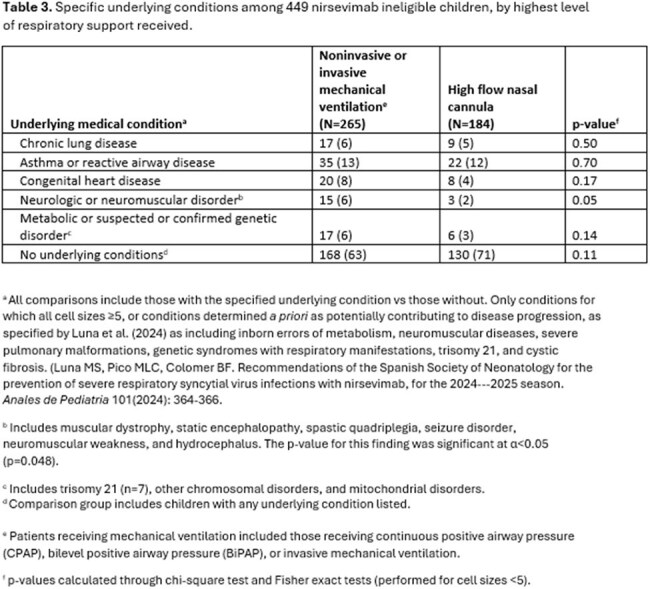 Figure 3
Peer Reviews
No public reviews on file for this paper yet. If you reviewed it on a platform where reviews are public (OpenReview, ICLR, NeurIPS, ICML), you can paste yours below so the community can read it here.
Videos
No videos yet. Explain this paper in a talk, walkthrough, or lecture? Add one.
Taxonomy
TopicsRespiratory viral infections research · Pneumonia and Respiratory Infections · Neonatal Respiratory Health Research