P-937. Impact of Rapid Carbapenemase Testing on Time to Active Therapy
Kellie Fortier, Jessica Chamberlin, Jared Cvetko, Lindsey A Johnson, Leonard Vande Kerkhoff, Rachael Craft

TL;DR
A new rapid test for antibiotic resistance reduced the time to start effective treatment in patients with drug-resistant infections.
Contribution
Implementation of NG-TEST® CARBA5 reduced time to active therapy by nearly two days in CRE patients.
Findings
Time to active therapy prescribed decreased from 97.8 to 54.6 hours with CARBA5 testing.
In-hospital mortality was 10% with CARBA5, compared to 16% previously.
24% of patients never received active therapy, with 77% of those cases from urine cultures.
Abstract
Antimicrobial resistance continues to be a worldwide threat. Data from the Center for Disease Control (CDC) and our health system shows carbapenem-resistant Enterobacterales (CRE) are a growing problem in the US and in Arizona; within our health system the incidence of CREs have been increasing since 2020. At the end of 2023, rapid carbapenemase testing with NG-TEST® CARBA5 was implemented. This study evaluated if implementation of the NG-TEST® CARBA-5 assay improved time to active therapyPrimary and Secondary Endpoints Primary and Secondary Endpoints This descriptive, retrospective analysis included admitted patients with an Enterobacterales positive culture, which exhibited non-susceptibility to a carbapenem and underwent CARBA5 testing between 3/1/24-6/30/24. The primary outcome was time to active therapy prescribed. Other outcomes included time to active therapy administered,…
Click any figure to enlarge with its caption.
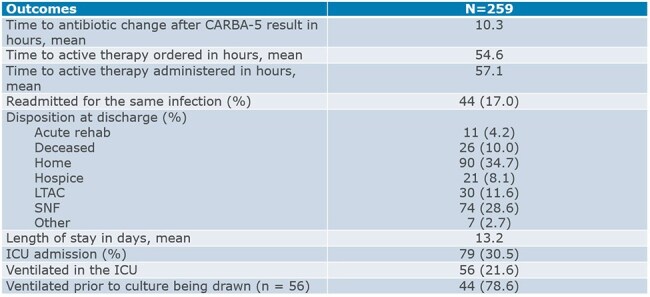 Figure 1
Peer Reviews
No public reviews on file for this paper yet. If you reviewed it on a platform where reviews are public (OpenReview, ICLR, NeurIPS, ICML), you can paste yours below so the community can read it here.
Videos
No videos yet. Explain this paper in a talk, walkthrough, or lecture? Add one.
Taxonomy
TopicsAntibiotic Resistance in Bacteria · Urinary Tract Infections Management · Antibiotics Pharmacokinetics and Efficacy