P-1520. Immune Depression Associated with Viral DNAemia in Pediatric Sepsis
Zachary Aldewereld, Brendan Connolly, Joe Carcillo

TL;DR
This study shows that viral DNA in the blood of children with sepsis is linked to weakened immune responses and a higher risk of secondary infections.
Contribution
The study identifies viral DNAemia as a novel indicator of immune depression and secondary infection risk in pediatric sepsis.
Findings
Viral DNAemia is associated with early and persistent lymphopenia and neutropenia in pediatric sepsis.
Patients with both viral DNAemia and persistent lymphopenia are at highest risk for secondary infections.
EBV and HHV6 DNAemia are independently linked to increased secondary infection rates.
Abstract
Sepsis remains a significant cause of pediatric mortality and morbidity. We recently reported that viral DNAemia was associated with increased mortality in pediatric sepsis, and that persistent lymphopenia early in the course of sepsis was independently associated with subsequent development of secondary infection. This study aims to further understand the immunologic alterations associated with these findings.Adjusted association of viral DNAemia with early markers of immune depressionPatients with viral DNAemia during their course were more likely to have multiple markers of immune depression after adjusting for age, max organ failure index on day 0, PRISM, and immunocompromised status. Persistent lymphopenia was also independently associated with secondary infection in prior analyses. IPMOF: Immunoparalysis-associated multiorgan failure.Adjusted association of secondary infection…
Click any figure to enlarge with its caption.
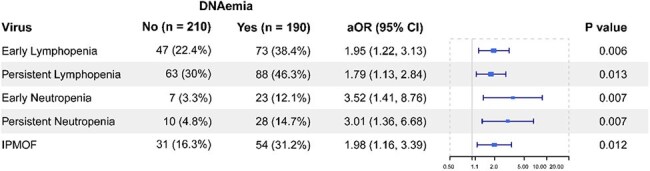 Figure 1
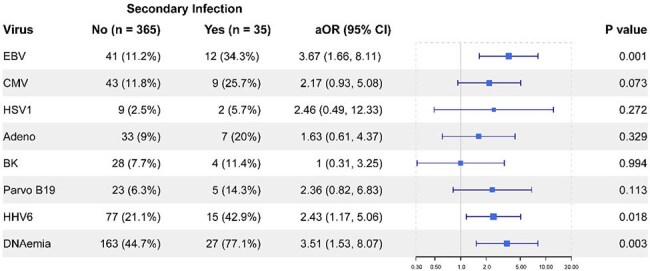 Figure 2
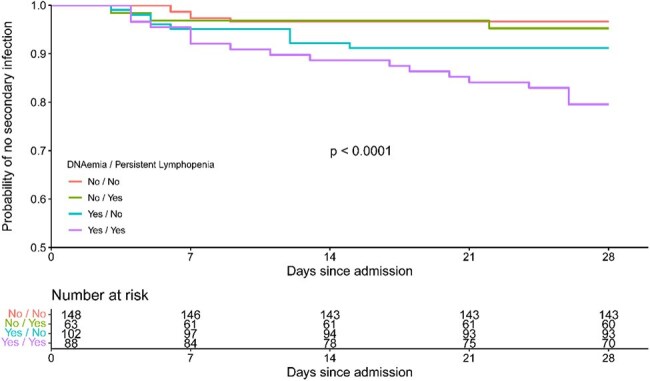 Figure 3
Peer Reviews
No public reviews on file for this paper yet. If you reviewed it on a platform where reviews are public (OpenReview, ICLR, NeurIPS, ICML), you can paste yours below so the community can read it here.
Videos
No videos yet. Explain this paper in a talk, walkthrough, or lecture? Add one.
Taxonomy
TopicsSepsis Diagnosis and Treatment · Cytomegalovirus and herpesvirus research · Adrenal Hormones and Disorders