P-572. Retrospective Analysis of Vibriosis presenting to a Tertiary University-Based Hospital in Florida and Correlation with Sea Surface Temperatures from 2011 to 2023
Joshua B French, Sunil Kamar, Antarpreet S Jutla, Norman Beatty

TL;DR
This study found a correlation between rising sea surface temperatures in the Gulf of Mexico and an increase in Vibrio infections at a Florida hospital from 2011 to 2023.
Contribution
The study is one of the first to correlate Vibrio infection trends with sea surface temperature data in a specific inland hospital setting.
Findings
Vibriosis cases increased significantly from 2017 to 2023, with half of skin and soft tissue infections occurring in 2022-2023.
Average sea surface temperatures in the Gulf of Mexico rose by 0.07°C per year during the study period.
Most skin and soft tissue infections occurred between June and November, suggesting seasonal and environmental influences.
Abstract
Vibrio species are free-living Gram-negative bacteria which are ubiquitous to certain marine and estuarine environments along the coasts of Florida. Vibriosis can take on several clinical forms, including gastrointestinal illnesses (GI) leading to diarrheal disease, skin and soft tissue infections (SSTI) which are known to be necrotizing, and bacteremia with sepsis. The effect of climate change on Vibrio species distribution and human infection is not well studied. We aim to assess whether warmer sea surface temperatures (SSTs) correlate with higher prevalence of Vibriosis.Figure 1:Map of the Gulf of Mexico showing the region used for SST analysis (2011 – 2023).SST data was obtained from the UF Department of Environmental Engineering Sciences, via the NASA Moderate Resolution Imaging Spectroradiometer (MODIS), which provides data at a spatial resolution of 4 km x 4km. The study area…
Genes, proteins, chemicals, diseases, species, mutations and cell lines named across the full text — each resolved to its canonical identifier and authoritative record.
Click any figure to enlarge with its caption.
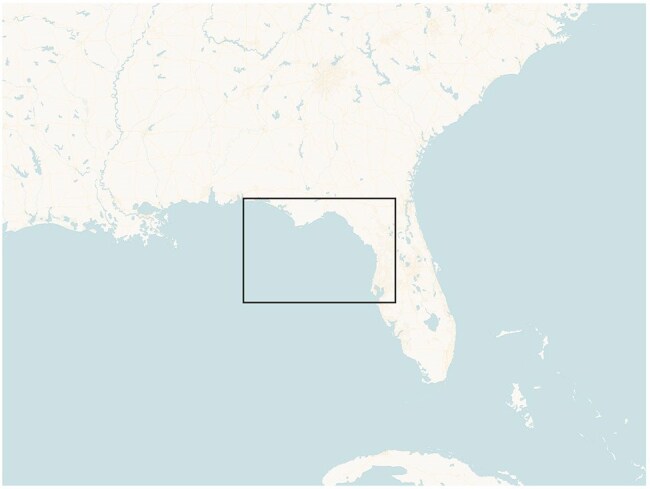 Figure 1
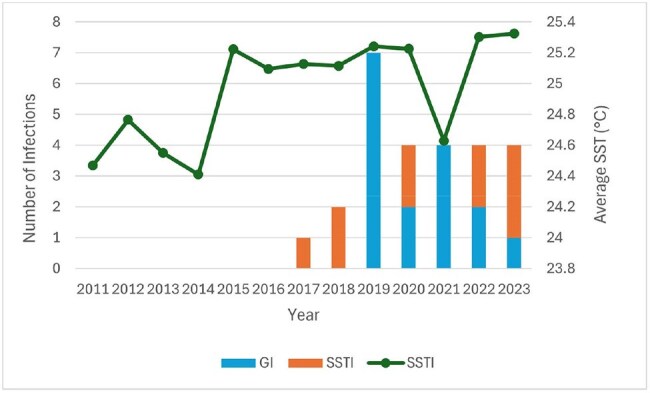 Figure 2
Peer Reviews
No public reviews on file for this paper yet. If you reviewed it on a platform where reviews are public (OpenReview, ICLR, NeurIPS, ICML), you can paste yours below so the community can read it here.
Videos
No videos yet. Explain this paper in a talk, walkthrough, or lecture? Add one.
Taxonomy
TopicsVibrio bacteria research studies · Climate Change and Health Impacts · Fecal contamination and water quality