Sex and APOE status moderate locus coeruleus network related resilience in preclinical Alzheimer's disease
Timothy Lawn, Ibai Diez, Elisenda Bueichekú2, Maxime Van Egroo, Gillian T Coughlan, Rachel F. Buckley, Dorene M. Rentz, Keith A. Johnson, Reisa A. Sperling, Jorge Sepulcre, Heidi I.L. Jacobs

TL;DR
This study finds that the brain's locus coeruleus network helps protect against cognitive decline in Alzheimer's, especially in women and those with a specific genetic risk.
Contribution
The study reveals sex and APOE status moderate LC network resilience in preclinical Alzheimer's.
Findings
Greater global LC functional connectivity is linked to slower cognitive decline, especially at higher Aβ levels.
LC connectivity with task-positive networks is associated with cognitive resilience, while default mode network effects vary with Aβ levels.
Females and APOE-e4 carriers show stronger LC-mediated resilience, suggesting targeted benefits for these groups.
Abstract
Brainstem nuclei such as the locus coeruleus (LC) are amongst the earliest regions affected by tau pathology in Alzheimer's disease (AD). The LC's extensive noradrenergic projections shape brain network architecture and its structural integrity is associated with resilience against cognitive decline. However, the role of LC network connectivity in cognitive resilience remains unclear, as does its potential differential impact across distinct population subgroups who might specifically benefit from its augmentation. We included 393 cognitively unimpaired Aβ+ individuals (centiloid > 19) from the A4 study who underwent baseline resting‐state fMRI and florbetapir Aβ‐PET as well as longitudinal Preclinical Alzheimer's Cognitive Composite (PACC) assessment. Pearsons's correlation coefficient was used to create maps of LC functional connectivity (LC‐FC) to 454 parcels of the Schaefer‐Tian…
Genes, proteins, chemicals, diseases, species, mutations and cell lines named across the full text — each resolved to its canonical identifier and authoritative record.
Click any figure to enlarge with its caption.
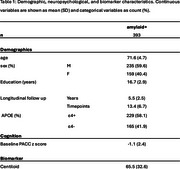 Figure 1
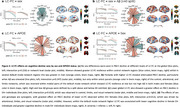 Figure 2
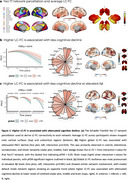 Figure 3
Peer Reviews
No public reviews on file for this paper yet. If you reviewed it on a platform where reviews are public (OpenReview, ICLR, NeurIPS, ICML), you can paste yours below so the community can read it here.
Videos
No videos yet. Explain this paper in a talk, walkthrough, or lecture? Add one.
Taxonomy
TopicsFunctional Brain Connectivity Studies · Neural dynamics and brain function · Alzheimer's disease research and treatments