Characterizing early symptomatic AD patients by visual and quantitative tau profiles
Amanda Morris, Min Jung Kim, Michael Pontecorvo, Sergey Shcherbinin, Leonardo Iaccarino, Samantha C. Burnham, John R. Sims, Dawn A. Brooks, Emily C. Collins, Mark A. Mintun, Ming Lu

TL;DR
This study examines different tau profiles in early Alzheimer's patients to understand how they progress clinically and biologically.
Contribution
The study identifies distinct tau profiles (V++/Q- and V+/Q+) in early symptomatic Alzheimer's patients and compares their progression patterns.
Findings
The V++/Q- and V+/Q+ groups showed less clinical progression compared to the V++/Q+ group.
Age-related comorbidities may explain milder AD pathology in the V++/Q- and V+/Q+ groups.
Biomarker progression was similar across all groups despite differing clinical outcomes.
Abstract
In the TRAILBLAZER‐ALZ 2 study (NCT04437511), tau pathology at screening was evaluated with flortaucipir Positron Emission Tomography (PET) with a combination of visual read (V) and quantitative (Q) standardized uptake value ratio (SUVr) approaches. In most cases, participants had an advanced Alzheimer's disease (AD) tau visual pattern (AD++) with an AD‐signature weighted neocortical SUVr>1.1 (V++/Q+). A minority of participants presented other V/Q profiles, namely an AD++ visual read with an SUVr≤1.1 (V++/Q‐) and a moderate AD tau pattern (AD+) with an SUVr>1.1 (V+/Q+). The objective of these analyses was to characterise these populations. All available TRAILBLAZER‐ALZ 2 placebo‐treated early symptomatic AD participants were included. Baseline characteristics and progression on both clinical scales (Clinical Dementia Rating ‐ Sum of Boxes [CDR‐SB], integrated Alzheimer Disease Rating…
Genes, proteins, chemicals, diseases, species, mutations and cell lines named across the full text — each resolved to its canonical identifier and authoritative record.
Click any figure to enlarge with its caption.
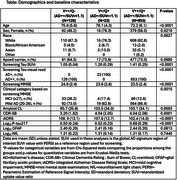 Figure 1
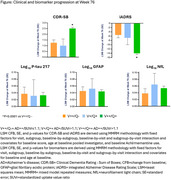 Figure 2
Peer Reviews
No public reviews on file for this paper yet. If you reviewed it on a platform where reviews are public (OpenReview, ICLR, NeurIPS, ICML), you can paste yours below so the community can read it here.
Videos
No videos yet. Explain this paper in a talk, walkthrough, or lecture? Add one.
Taxonomy
TopicsDementia and Cognitive Impairment Research · Alzheimer's disease research and treatments · Neurological Disease Mechanisms and Treatments