Utilization of plasma Aβ and p‐tau217 in predicting Aβ accumulation in PET A‐ non‐demented participants
Alexandra Gogola, Ann D Cohen, Brian J Lopresti, Beth E. Snitz, Milos D. Ikonomovic, Dana L Tudorascu, Davneet S Minhas, Xuemei Zeng, Julia K. Kofler, Cristy Matan, Howard J Aizenstein, Oscar L Lopez, Thomas K Karikari, Victor L. Villemagne

TL;DR
The study shows that plasma Aβ42/40 can predict future Aβ accumulation in the brain, even when PET scans are still negative, suggesting early detection of Alzheimer's risk.
Contribution
The study demonstrates that plasma Aβ42/40 is a significant predictor of future Aβ accumulation in non-demented individuals who are initially PET Aβ-negative.
Findings
Plasma Aβ42/40 status significantly predicts progression from PET Aβ-negative to Aβ-positive within 4 years.
Plasma Aβ42/40 is significantly associated with Aβ accumulation, even after adjusting for covariates like age and APOE*4 status.
Only a small proportion of PET Aβ-negative participants had elevated p-tau217 levels.
Abstract
As Alzheimer's disease studies increasingly utilize plasma biomarkers, the associations of plasma and PET biomarkers of β‐amyloid (Aβ) in relation to Aβ accumulation and progression from PET A‐ to A+ must be better understood. We evaluated 58 non‐demented participants from ADNI and 170 from the University of Pittsburgh (UPitt) who had plasma Aβ42/Aβ40 measures and longitudinal Aβ‐PET. We additionally evaluated 124 UPitt participants who had p‐tau217 measures. All participants were PET A‐ at baseline. Plasma Aβ42/40 values were derived through either the C2N mass spectrometry‐based assay (ADNI) or Simoa assay (UPitt). p‐tau217 values were derived through the Janssen p‐tau217+ Simoa assay. Cut‐off values of 0.15 and 0.11 determined Aβ42/40 status for the ADNI and UPitt datasets, respectively, A cut‐off of 0.083 pg/mL was used for p‐tau217. Kaplan‐Meyer survival models evaluated the…
Genes, proteins, chemicals, diseases, species, mutations and cell lines named across the full text — each resolved to its canonical identifier and authoritative record.
Click any figure to enlarge with its caption.
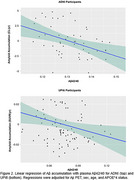 Figure 1
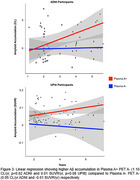 Figure 2
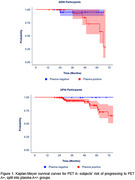 Figure 3
Peer Reviews
No public reviews on file for this paper yet. If you reviewed it on a platform where reviews are public (OpenReview, ICLR, NeurIPS, ICML), you can paste yours below so the community can read it here.
Videos
No videos yet. Explain this paper in a talk, walkthrough, or lecture? Add one.
Taxonomy
TopicsAlzheimer's disease research and treatments · Dementia and Cognitive Impairment Research · Amyloidosis: Diagnosis, Treatment, Outcomes