PART characterization using MK‐6240 and Flortaucipir
Carolina Soares, Emma Ruppert, Pamela C.L. Ferreira, Marina Scop Madeiros, Andreia Rocha, Matheus Scarpatto Rodrigues, Bruna Bellaver, Markley Silva Oliveira, Guilherme Povala, Livia Amaral, Firoza Z Lussier, Joseph C. Masdeu, Dana L Tudorascu, Thomas K Karikari

TL;DR
This study compares two tau-PET tracers to identify brain tau pathology in older adults without amyloid-beta, finding differences in detection rates and biomarker levels.
Contribution
The study provides a direct comparison of MK-6240 and Flortaucipir for characterizing primary age-related tauopathy (PART) in vivo.
Findings
MK-6240 identified more A-/T+ cases than Flortaucipir.
Low concordance (44%) was found between the two tau tracers in A-/T+ cases.
A-/T+ individuals showed lower biomarker levels compared to A+/T+ but not A-/T-.
Abstract
Older adults with brain tau pathology but no evident amyloid‐beta (A) pathology can be referred to as primary age‐related tauopathy (PART). However, in vivo characterization of PART using biomarkers remains unclear, varying based on the method used to define tau pathology (e.g. different tau‐PET tracers). Here, we conducted a head‐to‐head characterization of PART using two different tau‐PET tracers. We studied 433 individuals from the HEAD cohort (244 CU, 138 MCI, and 51 with dementia). Participants underwent clinical assessments, MRI, A‐PET, both MK‐6240 and Flortaucipir scans, and a subset with plasma biomarkers (n = 332). A‐PET positivity was defined as Centiloid>24. Tau‐positivity(T) was determined by MK‐6240 and Flortaucipir SUVR values exceeding the mean+2SD in at least one Braak region anchored in CU A‐ individuals followed by visual confirmation in A‐/T+ cases. Concordance…
Genes, proteins, chemicals, diseases, species, mutations and cell lines named across the full text — each resolved to its canonical identifier and authoritative record.
Click any figure to enlarge with its caption.
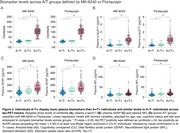 Figure 1
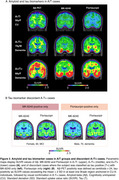 Figure 2
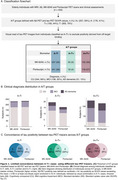 Figure 3
Peer Reviews
No public reviews on file for this paper yet. If you reviewed it on a platform where reviews are public (OpenReview, ICLR, NeurIPS, ICML), you can paste yours below so the community can read it here.
Videos
No videos yet. Explain this paper in a talk, walkthrough, or lecture? Add one.
Taxonomy
TopicsDementia and Cognitive Impairment Research · Intracerebral and Subarachnoid Hemorrhage Research · Alzheimer's disease research and treatments