Head‐to‐Head evaluation of plasma p‐tau217 associations with MK6240, Flortaucipir, PI2620, and RO948 tau PET tracers
Pamela C.L. Ferreira, Tevy Chan, Bruna Bellaver, Guilherme Povala, Guilherme Bauer‐Negrini, Emma Ruppert, Carolina Soares, Cynthia Felix, Andreia Rocha, Marina Scop Madeiros, Livia Amaral, Juli Cehula, Firoza Z Lussier, Joseph C. Masdeu, Dana L Tudorascu, Thomas K Karikari

TL;DR
This study compares how well different tau PET tracers correlate with plasma p-tau217 in Alzheimer's disease.
Contribution
The first head-to-head comparison of plasma p-tau217 associations with four tau PET tracers in Alzheimer's disease.
Findings
Plasma p-tau217 showed stronger associations with MK6240 compared to Flortaucipir in cognitively unimpaired individuals.
Across all tracers, MK6240 explained the highest proportion of variance in plasma p-tau217 concentrations.
Abstract
Tau phosphorylation and aggregation are hallmark features of Alzheimer's disease pathology(AD). Previous studies have shown that plasma phosphorylated tau(p‐tau) at threonine 217 can detect AD‐related tau tangle pathology. However, the head‐to‐head association between p‐tau217 and different tau PET tracers remains unexplored. Here, we conducted a head‐to‐head comparison of the association between plasma p‐tau217 and four distinct tau PET tracers[MK6240, Flortaucipir(FTP), PI2620, RO948]. We studied 338 individuals across the AD continuum from the HEAD study[190 cognitively unimpaired elderly(CU), 109 with mild cognitive impairment(MCI), and 39 with dementia] with available FTP, MK6240, and plasma p‐tau217 measured by ALZpath assay. A subset of 64 individuals(28 CU, 25 MCI, and 11 dementia) also had PI2620 and RO948, and p‐tau217 measured by Lumipulse. The strength of the association…
Genes, proteins, chemicals, diseases, species, mutations and cell lines named across the full text — each resolved to its canonical identifier and authoritative record.
Click any figure to enlarge with its caption.
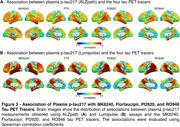 Figure 1
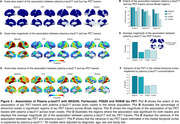 Figure 2
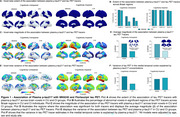 Figure 3
Peer Reviews
No public reviews on file for this paper yet. If you reviewed it on a platform where reviews are public (OpenReview, ICLR, NeurIPS, ICML), you can paste yours below so the community can read it here.
Videos
No videos yet. Explain this paper in a talk, walkthrough, or lecture? Add one.
Taxonomy
TopicsAlzheimer's disease research and treatments · Dementia and Cognitive Impairment Research · Intracerebral and Subarachnoid Hemorrhage Research