Periodic and Aperiodic EEG Parameters During Transitions from Wakefulness to Light Sleep: Preliminary Results on Patients with Mild Cognitive Impairment Due to Alzheimer's Disease vs. Healthy Elderly
Matteo Carpi, Enrico Michele Salamone, Claudio Del Percio, Roberta Lizio, Susanna Lopez, Giuseppe Noce, Mina De Bartolo, Veronica Henao Isaza, Antonio Pio Afragola, Burcu Bölükbaş, Lorenc Barjami, Bahar Güntekin, Görsev Yener, Claudio Babiloni

TL;DR
This study compares brain wave patterns during sleep onset in people with early Alzheimer's-related cognitive issues and healthy older adults.
Contribution
The study introduces a novel approach to analyzing EEG rhythms by combining periodic and aperiodic components during sleep transitions in Alzheimer's patients.
Findings
ADMCI patients showed reduced posterior alpha activity during wakefulness to light sleep transitions compared to healthy controls.
Aperiodic EEG parameters indicated increased cortical inhibition during sleep onset, but without significant differences between groups.
Parietal-occipital regions showed greater inhibition than anterior regions during vigilance stage transitions.
Abstract
The periodic (e.g., EEG alpha power density) and aperiodic (offset and slope of EEG power density) components of resting‐state EEG rhythms reflect different aspects of global neural dynamics and have been linked to excitatory/inhibitory balance. This study investigates these components across vigilance stages (wakefulness, flattening, ripples) in patients with mild cognitive impairment due to Alzheimer's disease (ADMCI) compared to healthy elderly (NOLD). Spectral analysis was performed on EEG data recorded from 19 scalp electrodes during a ∼30‐minute session in age‐, sex‐, and education‐matched ADMCI and NOLD participants (n = 17 vs. n = 11) showing transitions from quiet wakefulness (wakefulness stage, characterized by dominant posterior alpha activity at 8–12 Hz) to light sleep (flattening stage, marked by reduced EEG amplitude, and ripples stage, with diffuse theta activity at 4–7…
Genes, proteins, chemicals, diseases, species, mutations and cell lines named across the full text — each resolved to its canonical identifier and authoritative record.
Click any figure to enlarge with its caption.
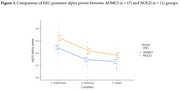 Figure 1
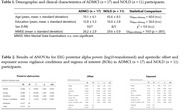 Figure 2
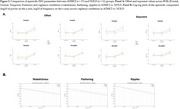 Figure 3
Peer Reviews
No public reviews on file for this paper yet. If you reviewed it on a platform where reviews are public (OpenReview, ICLR, NeurIPS, ICML), you can paste yours below so the community can read it here.
Videos
No videos yet. Explain this paper in a talk, walkthrough, or lecture? Add one.
Taxonomy
TopicsSleep and Wakefulness Research · EEG and Brain-Computer Interfaces · Sleep and Work-Related Fatigue