Distinct risk factors drive white matter hyperintensity progression which relates to cognitive performance in individuals at risk of Alzheimer's disease
Patricia Genius, Blanca Rodríguez‐Fernández, Mahnaz Shekari, Gonzalo Sánchez‐Benavides, Gwendlyn Kollmorgen, Clara Quijano Rubio, Carole H Sudre, Marta Cirach, Mark Nieuwenhuijsen, Marc Suárez‐Calvet, Arcadi Navarro, Juan Domingo Gispert, Natalia Vilor‐Tejedor

TL;DR
The study finds that factors like low education and genetic risks drive white matter changes linked to cognitive decline in people at risk for Alzheimer's.
Contribution
The study identifies novel risk factors for white matter hyperintensity progression and their cognitive consequences in Alzheimer's risk individuals.
Findings
WMHs increased by 9.5% in participants over three years.
Low educational attainment and AD-related genetic risks were key predictors of WMH progression.
WMH progression correlated with worse memory and PACC performance.
Abstract
White matter hyperintensities (WMHs) are a hallmark of cerebral small vessel disease (CSVD) linked to cognitive impairment and risk of dementia. Several risk factors are associated with WMH, but their contribution to WMH progression remains unclear. This study aimed to identify risk factors driving WMHs changes in middle‐aged individuals and to examine their impact on cognitive decline. Global WMHs and cognitive composites were evaluated at baseline and after three years on 75 cognitively unimpaired individuals at risk of Alzheimer's disease (AD) whose WMH volumes increased (Progressors: ΔWMHv2‐v1 > 10+Percentile ΔWMHv2‐v1=0). CSF biomarkers, exposure to air pollutants, AD pathway‐specific polygenic risk scores (PRS) and cardiovascular risk factors were evaluated as predictors of the annual rate of change of global WMH, which was assessed as a predictor of cognitive performance.…
Genes, proteins, chemicals, diseases, species, mutations and cell lines named across the full text — each resolved to its canonical identifier and authoritative record.
Click any figure to enlarge with its caption.
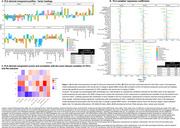 Figure 1
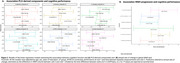 Figure 2
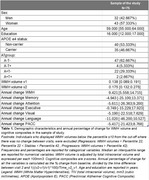 Figure 3
Peer Reviews
No public reviews on file for this paper yet. If you reviewed it on a platform where reviews are public (OpenReview, ICLR, NeurIPS, ICML), you can paste yours below so the community can read it here.
Videos
No videos yet. Explain this paper in a talk, walkthrough, or lecture? Add one.
Taxonomy
TopicsDementia and Cognitive Impairment Research · Neurological Disease Mechanisms and Treatments · Neurological Disorders and Treatments