Large‐scale cerebrospinal fluid proteomics identifies molecular signatures of disease progression across Alzheimer's disease and sporadic frontotemporal lobar degeneration
Rowan Saloner, Joshua Downer, Julia D Webb, Argentina Lario Lago, Peter A. Ljubenkov, Lawren VandeVrede, Adam M. Staffaroni, Emily W. Paolillo, Salvatore Spina, Lea T. Grinberg, Renaud La Joie, Gil D. Rabinovici, Joel H Kramer, Maria Luisa Gorno Tempini, Bruce L. Miller

TL;DR
This study uses cerebrospinal fluid proteomics to find shared and distinct protein patterns in Alzheimer's and frontotemporal lobar degeneration, linking them to disease severity.
Contribution
The study identifies transdiagnostic molecular signatures in neurodegenerative diseases using large-scale CSF proteomics.
Findings
1,026 differentially abundant proteins were identified across AD and FTLD subtypes.
Neuron-enriched protein modules strongly correlate with clinical severity across diseases.
Proteomic signatures outperformed existing biomarkers like CSF neurofilament light in predicting disease progression.
Abstract
Alzheimer's disease (AD), frontotemporal lobar degeneration (FTLD), and other neurodegenerative diseases are characterized by pathological protein misfolding, yet postmortem neuropathological measures collectively explain less than half the variance in antemortem clinical progression. We leveraged large‐scale cerebrospinal fluid (CSF) proteomics to identify overlapping and distinct molecular signatures that help explain clinical severity across patients with AD, FTLD‐tau, and FTLD‐TDP. CSF was assayed via aptamer‐based proteomics (SomaScan v4.1 >7k proteins) in 132 symptomatic AD patients (positive CSF p‐Tau181/Ab42 ratios and/or amyloid PET), 64 sporadic FTLD‐tau patients, 42 sporadic FTLD‐TDP patients, and 72 AD biomarker‐negative controls. FTLD cases screened negative for autosomal dominant FTLD mutations and were classified via either autopsy confirmation (65% of cases; FTLD‐tau:…
Genes, proteins, chemicals, diseases, species, mutations and cell lines named across the full text — each resolved to its canonical identifier and authoritative record.
Click any figure to enlarge with its caption.
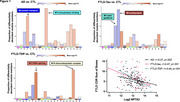 Figure 1
Peer Reviews
No public reviews on file for this paper yet. If you reviewed it on a platform where reviews are public (OpenReview, ICLR, NeurIPS, ICML), you can paste yours below so the community can read it here.
Videos
No videos yet. Explain this paper in a talk, walkthrough, or lecture? Add one.
Taxonomy
TopicsAlzheimer's disease research and treatments · Dementia and Cognitive Impairment Research · Advanced Proteomics Techniques and Applications