Study of blood biomarkers detected in NULISA to stratify the prospective multicenter ALZAN cohort of memory clinic patients according to ATN status, presence of synucleinopathy and diagnosis
Sylvain Lehmann, Constance Delaby, Nicolas Pradeilles, Said Assou, Christophe Hirtz, Germain Busto, Brice Dupuy, Marie Duchiron, Mehdi Morchikh, Geneviève Barnier‐Figue, Florence Perrein, Audrey Gabelle, Cédric Turpinat, Snejana Jurici, Karim Bennys

TL;DR
This study evaluates blood biomarkers in a memory clinic cohort to identify Alzheimer's disease and related dementias based on brain amyloidopathy, neurodegeneration, and synucleinopathy.
Contribution
The study identifies top-performing blood biomarkers for Alzheimer's disease and highlights new potential targets using a multiplex approach.
Findings
pTau_231, pTau_217, and pTau_181 were top biomarkers for brain amyloidopathy and Alzheimer's disease.
No blood biomarkers showed significant differences for synucleinopathy detection.
The study emphasizes the value of combining multiple biomarkers and investigating confounding factors.
Abstract
The objective of this study in the multicenter prospective ALZAN cohort is to assess the performance of blood biomarkers for detecting biological processes based on the ATN classification and synuclein seed amplification assay (SAA), as well as for diagnosing Alzheimer's disease (AD) and related dementias, including frontotemporal dementia and Lewy body dementia. The ALZAN cohort (NCT05427448) consists of over 400 patients seen in memory clinics at the Montpellier and Nîmes university hospitals and Perpignan hospital. As part of standard care, cerebrospinal fluid (CSF) biomarkers (Aβ40/42, Tau, pTau181) are measured. Clinical and biological data, including ApoE4 status and Mini‐Mental State Examination (MMSE) scores, are collected. Blood biomarkers are measured in plasma using the ultrasensitive multiplex NULISA approach, allowing relative quantification of 120 biomarkers of interest…
Genes, proteins, chemicals, diseases, species, mutations and cell lines named across the full text — each resolved to its canonical identifier and authoritative record.
Click any figure to enlarge with its caption.
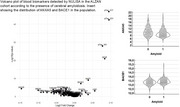 Figure 1
Peer Reviews
No public reviews on file for this paper yet. If you reviewed it on a platform where reviews are public (OpenReview, ICLR, NeurIPS, ICML), you can paste yours below so the community can read it here.
Videos
No videos yet. Explain this paper in a talk, walkthrough, or lecture? Add one.
Taxonomy
TopicsDementia and Cognitive Impairment Research · Alzheimer's disease research and treatments · Functional Brain Connectivity Studies