Microstructural and Water Exchange Alterations in ARIA‐E in a Real‐World Cohort Receiving Anti‐Amyloid Therapy
Christopher A Brown, Manuel Taso, Sandhitsu R. Das, Danielle Hing, Emily McGrew, Paul A. Yushkevich, Dawn Mechanic‐Hamilton, Ilya M. Nasrallah, David C Alsop, John A. Detre, David A. Wolk

TL;DR
This study explores MRI techniques to detect and understand ARIA-E, a risk of anti-amyloid therapy, by analyzing brain microstructure and water exchange in patients.
Contribution
The study introduces novel MRI techniques to detect ARIA-E and provides insights into its underlying mechanisms through microstructural and water exchange analysis.
Findings
Patients who developed ARIA-E had lower baseline Neurite Density Index and Orientation Dispersion Index compared to those without ARIA.
Water exchange and white matter free water fraction increased in ARIA-E patients over time compared to controls.
Water exchange sensitive maps effectively visualize ARIA-E and ARIA-H.
Abstract
ARIA‐E represents the greatest risk associated with anti‐amyloid therapy (AAT) and is thought to be due to excessive inflammatory response resulting in FLAIR abnormalities on imaging and occasionally symptomatic manifestations. While FLAIR MRI monitoring for ARIA‐E is now routinely performed, additional MRI contrast mechanisms could provide improved detection and mechanistic insights. We investigated perivascular spaces, microstructural alterations, and parenchymal water permeability in a real‐world cohort receiving AAT using novel MRI techniques. Eight participants receiving AAT at the University of Pennsylvania underwent advanced imaging paired with clinical safety MRIs at baseline and during treatment. Advanced imaging sequences included multi‐shell diffusion MRI to assess microstructure, an ultralong TE T2‐weighted sequence to evaluate perivascular spaces structures, and a novel…
Click any figure to enlarge with its caption.
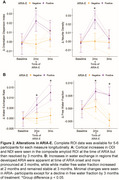 Figure 1
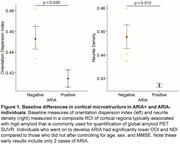 Figure 2
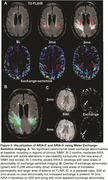 Figure 3
Peer Reviews
No public reviews on file for this paper yet. If you reviewed it on a platform where reviews are public (OpenReview, ICLR, NeurIPS, ICML), you can paste yours below so the community can read it here.
Videos
No videos yet. Explain this paper in a talk, walkthrough, or lecture? Add one.
Taxonomy
TopicsCerebrospinal fluid and hydrocephalus · Intracerebral and Subarachnoid Hemorrhage Research · Advanced Neuroimaging Techniques and Applications