Vascular plasticity and microglial mediators link blood‐brain barrier dysfunction to synaptic decline in cognitively typical aging independent of amyloid
Jonah Nadelmann Keller, Hannah Radabaugh, Nikolaos Karvelas, Nivetha Brathaban, Caleb H Radtke, Claudia E Kunney, Anna M Torten Rabinowitz, Harrison W Chan, Kaitlin B Casaletto, Henrik Zetterberg, Carlos Cruchaga, Adam Ferguson, Joel H Kramer, Katerina Akassoglou, Fanny M Elahi

TL;DR
This study shows that blood-brain barrier dysfunction, linked to fibrinogen levels, contributes to synaptic decline in aging without amyloid buildup.
Contribution
The study identifies thromboinflammatory pathways and vascular-immune mediators associated with synaptic decline in typical aging, independent of amyloid pathology.
Findings
Higher CSF fibrinogen is associated with elevated synaptic and neurodegenerative markers like pTau, GAP43, NRGN, and SNAP25.
Fourteen proteins mediate the link between fibrinogen and neurodegeneration, involving vascular plasticity and immune activation.
Vascular-specific mediators are reduced in amyloid-positive individuals, suggesting distinct mechanisms in amyloid aging.
Abstract
Cognitive decline frequently occurs during typical aging, yet the molecular mechanisms underlying this process remain poorly understood, especially in the absence of classical neuropathology such as amyloid. Vascular dysfunction and increased blood‐brain barrier (BBB) permeability have emerged as potential contributors. This study examined whether thromboinflammation, indicated by fibrinogen levels in cerebrospinal fluid (CSF), affects synaptic health and cognition in amyloid‐negative, typical aging. We measured CSF fibrinogen and synaptic/neurodegenerative markers (pTau, GAP43, NRGN, and SNAP25) in cognitively normal older adults (N = 70). An unbiased proteomic screen (SomaScan 7k) was then performed to identify specific mediators linking fibrinogen to these markers, followed by validation in an independent cohort (N = 482). To assess potential interactions with amyloid pathology, we…
Genes, proteins, chemicals, diseases, species, mutations and cell lines named across the full text — each resolved to its canonical identifier and authoritative record.
Click any figure to enlarge with its caption.
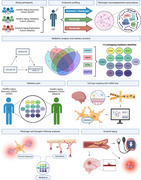 Figure 1
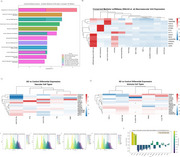 Figure 2
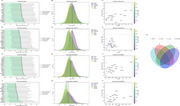 Figure 3
Peer Reviews
No public reviews on file for this paper yet. If you reviewed it on a platform where reviews are public (OpenReview, ICLR, NeurIPS, ICML), you can paste yours below so the community can read it here.
Videos
No videos yet. Explain this paper in a talk, walkthrough, or lecture? Add one.
Taxonomy
TopicsBlood properties and coagulation · Barrier Structure and Function Studies · Neuroinflammation and Neurodegeneration Mechanisms