The Binding Patterns of Neurofibrillary Tangles Observed With High‐Resolution Autoradiography of 18F MK 6240 and 18F AV1451 Are Comparable and Predominantly Recognize Tangles at the Middle Stage
Sujala Ghatamaneni, Courtney Hruska, Ian Shin, Tyler Bruinsma, Jeyeon Lee, Hoon‐Ki Min, Ping Fang, Christina M. Moloney, Ashley C. Wood, Eleni Constantopoulos, R. Ross Reichard, David T. Jones, Christopher G Schwarz, Jonathan Graff Radford, David S. Knopman, Clifford R. Jack

TL;DR
Two tau PET tracers, 18F MK 6240 and 18F AV1451, show similar binding to middle-stage tau tangles in Alzheimer's disease and non-AD tauopathies.
Contribution
The study demonstrates that both tracers preferentially bind to middling tangle maturity levels, offering insights for improved AD diagnostics.
Findings
Both tracers showed strong binding to AD tau aggregates and minimal binding to non-AD tauopathies.
Tracer binding was well correlated with PHF-1 staining, indicating preference for middling tangle maturity.
Early tangle maturity was better detected by CP-13 compared to PHF-1 and tracer binding.
Abstract
An intense search is underway for tau PET tracers with enhanced capability to visualize tau aggregates. Research indicates that [18F] AV1451 and [18F]MK 6240 exhibit comparable binding properties in terms of spatial distribution and severity of tau aggregates, as observed both in‐vivo and in‐vitro. This study focused on head‐to‐head pathological comparison of both the tracers binding specificity to tangle maturity levels (pretangles, mature tangles and ghost tangles) of tau aggregates as seen on autoradiography as compared to CP‐13 (early tangle maturity marker) and PHF‐1(middling tangle maturity marker) immunohistochemical (IHC) stains in Alzheimer's disease (AD) and non‐AD tauopathies. Study participants included included those with AD and non‐AD tauopathies. Analyses were performed on serial 5um formalin fixed paraffin embedded postmortem human brain sections acquired from Mayo…
Genes, proteins, chemicals, diseases, species, mutations and cell lines named across the full text — each resolved to its canonical identifier and authoritative record.
Click any figure to enlarge with its caption.
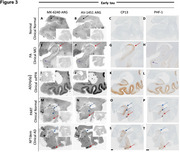 Figure 1
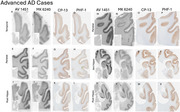 Figure 2
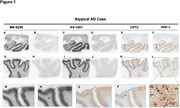 Figure 3
Peer Reviews
No public reviews on file for this paper yet. If you reviewed it on a platform where reviews are public (OpenReview, ICLR, NeurIPS, ICML), you can paste yours below so the community can read it here.
Videos
No videos yet. Explain this paper in a talk, walkthrough, or lecture? Add one.
Taxonomy
TopicsAlzheimer's disease research and treatments · Dementia and Cognitive Impairment Research · Cerebrospinal fluid and hydrocephalus