Tau PET and Plasma p‐tau217 as Independent and Synergistic Predictors of Clinical Progression in Early Symptomatic AD Patients With Amyloid and Tau Pathology
Min Jung Kim, Amanda Morris, Leonardo Iaccarino, Michael Pontecorvo, Sergey Shcherbinin, John R. Sims, Dawn A. Brooks, Emily C. Collins, Mark A. Mintun, Ming Lu

TL;DR
This study shows that combining blood-based p-tau217 and tau PET imaging improves prediction of clinical decline in early Alzheimer's patients.
Contribution
Demonstrates synergistic value of plasma p-tau217 and tau PET for predicting AD progression in amyloid-positive patients.
Findings
Patients with higher baseline tau PET and p-tau217 showed significant clinical worsening at Week 76.
Combining tau PET and p-tau217 provided better prognostic value than either marker alone.
Higher risk of progressing to CDR-GS MCID was observed in patients with elevated tau PET and p-tau217.
Abstract
Blood‐based biomarkers have significant potential to aid in the diagnosis of Alzheimer's disease (AD), providing a more accessible option than cerebrospinal fluid testing or positron emission tomography (PET). The objective of this study is to evaluate the prognostic value of a plasma p‐tau217 immunoassay and tau PET imaging with respect to clinical progression. Placebo‐treated, early symptomatic AD patients (all amyloid‐positive by amyloid PET) in the TRAILBLAZER‐ALZ 2 study (NCT04437511) were analyzed. Patients (starting cohort N = 857) were split into below and above median groups based on median values of baseline flortaucipir tau PET signal evaluated by global AD‐signature region‐of‐interest standardized uptake value ratios (Tau PETlower, Tau PEThigher) and baseline plasma p‐tau217 levels (p‐tau217lower, p‐tau217higher). The following clinical measures were assessed at Week 76:…
Genes, proteins, chemicals, diseases, species, mutations and cell lines named across the full text — each resolved to its canonical identifier and authoritative record.
Click any figure to enlarge with its caption.
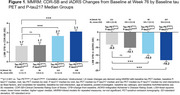 Figure 1
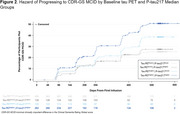 Figure 2
Peer Reviews
No public reviews on file for this paper yet. If you reviewed it on a platform where reviews are public (OpenReview, ICLR, NeurIPS, ICML), you can paste yours below so the community can read it here.
Videos
No videos yet. Explain this paper in a talk, walkthrough, or lecture? Add one.
Taxonomy
TopicsDementia and Cognitive Impairment Research · Alzheimer's disease research and treatments · Intracerebral and Subarachnoid Hemorrhage Research