Elevated CSF levels of matrix metalloproteinase‐12 as a potential marker for microhemorrhage risk in autosomal dominant Alzheimer disease
Nelly Joseph‐Mathurin, Katherine Gong, Gengsheng Chen, Parinaz Massoumzadeh, Jeremy F. Strain, Laura Ibanez, Brian A. Gordon, Jorge J. Llibre‐Guerra, Jason J. Hassenstab, Richard J. Perrin, Chengjie Xiong, Randall J. Bateman, Eric McDade, Tammie L.S. Benzinger, Carlos Cruchaga

TL;DR
This study finds that higher levels of a protein called matrix metalloproteinase-12 in cerebrospinal fluid may predict a higher risk of brain microhemorrhages in people with a genetic form of Alzheimer's disease.
Contribution
The study identifies elevated CSF MMP12 as a potential biomarker for microhemorrhage risk in autosomal dominant Alzheimer disease.
Findings
Eight proteins, including MMP12, were differentially expressed in carriers with larger white matter hyperintensity volumes.
MMP12 levels were particularly high in individuals with severe microhemorrhages.
Higher CSF levels of MMP12 were associated with increased likelihood of new microhemorrhage development.
Abstract
With the advent of disease‐modifying treatment for Alzheimer disease (AD), identifying biomarkers for predicting risk for amyloid‐related imaging abnormalities (ARIA), hemorrhagic or edema types, is of increased interest. ARIA are thought to be related to disruption of the blood‐brain barrier as fibrillary amyloid is cleared from the brain. Molecular and cellular processes related to these events may inform future trials. We investigated proteomics related to abnormal neurovascular imaging phenotypes such as white matter hyperintensities (WMH) in autosomal dominant AD (ADAD), a relatively young population at risk for ARIA. Participants from the Dominantly Inherited Alzheimer Network observational study (nCarriers=290 and nNon‐Carriers=183) were assessed for WMH and microhemorrhages using T2‐FLAIR and T2*GRE MRI, and for CSF proteomics using the 7k Somalogic® platform. A subset…
Genes, proteins, chemicals, diseases, species, mutations and cell lines named across the full text — each resolved to its canonical identifier and authoritative record.
Click any figure to enlarge with its caption.
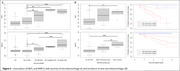 Figure 1
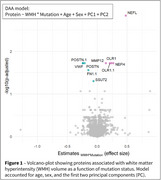 Figure 2
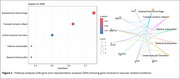 Figure 3
Peer Reviews
No public reviews on file for this paper yet. If you reviewed it on a platform where reviews are public (OpenReview, ICLR, NeurIPS, ICML), you can paste yours below so the community can read it here.
Videos
No videos yet. Explain this paper in a talk, walkthrough, or lecture? Add one.
Taxonomy
TopicsIntracerebral and Subarachnoid Hemorrhage Research · Alzheimer's disease research and treatments · Dementia and Cognitive Impairment Research