An unusual clinical variant of systemic lupus erythematosus
Switi Jawade, Savita Pohekar

Abstract
Genes, proteins, chemicals, diseases, species, mutations and cell lines named across the full text — each resolved to its canonical identifier and authoritative record.
Click any figure to enlarge with its caption.
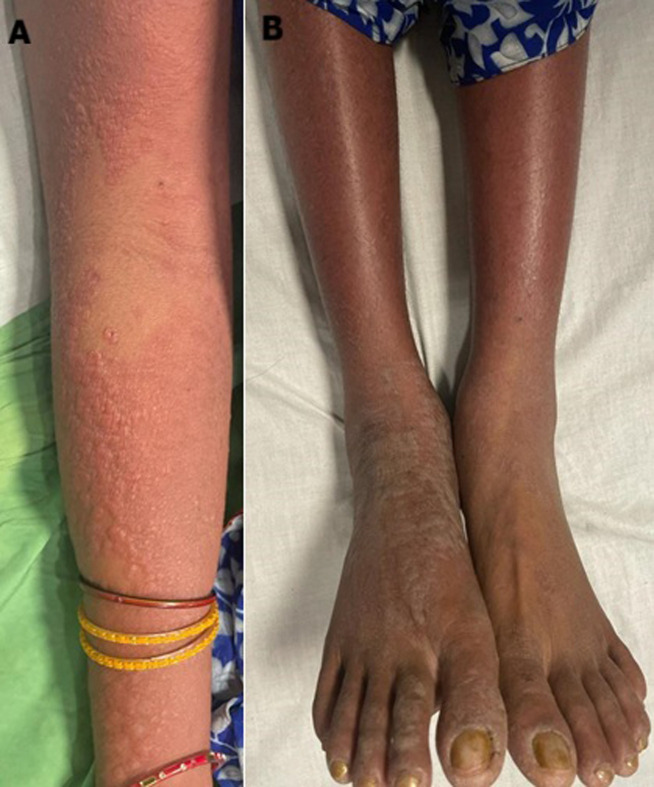 Figure 1
Peer Reviews
No public reviews on file for this paper yet. If you reviewed it on a platform where reviews are public (OpenReview, ICLR, NeurIPS, ICML), you can paste yours below so the community can read it here.
Videos
No videos yet. Explain this paper in a talk, walkthrough, or lecture? Add one.
Taxonomy
TopicsSystemic Lupus Erythematosus Research · Systemic Sclerosis and Related Diseases · Autoimmune Bullous Skin Diseases
Image in medicine
Systemic lupus erythematosus (SLE) is a complex and systemic autoimmune disease in which a person's own immune system attacks their healthy cells and tissue with multi-organ and central nervous system involvement, such as brain, skin, bones, kidney, joints, lungs and blood vessels. The disease is more common in childbearing age in females; it has been well reported in paediatrics and among the elderly. A 24-year-old female visited the dermatology outpatient department with complaints of a fluid-filled lesion (red colour) over the hand and red lesions on the lower extremities with pedal oedema, burning sensation near the lesion, knee, elbow and wrist joint pain. On physical examination, photosensitive rashes were observed, and laboratory investigation showed the patient had systemic lupus erythematosus. The patient was referred to the dermatology department for further medical management.
A) erythematous fluid-filled lesion over the hand; B) erythematous lesion over the lower extremities