Microglia‐specific Alzheimer's disease polygenic risk score predicts longitudinal increase in plasma tau and faster cognitive decline in cognitively unimpaired older adults
Brahyan J Galindo Mendez, Ling Teng, Gad A. Marshall, Lei Liu, Jasmeer P. Chhatwal, Timothy J. Hohman, Richard Mayeux, Philip L. De Jager, Robert A. Rissman, Keith A. Johnson, Reisa A. Sperling, Hyun‐Sik Yang

TL;DR
A genetic risk score specific to microglia predicts increased plasma tau levels and faster cognitive decline in older adults without cognitive issues.
Contribution
A novel microglia-specific Alzheimer's polygenic risk score is shown to predict plasma tau increase and cognitive decline in cognitively unimpaired individuals.
Findings
Microglia-specific AD polygenic risk score is associated with longitudinal increase in plasma pTau217.
Microglia-specific AD polygenic risk score is linked to faster cognitive decline as measured by PACC.
Approximately 42% of the cognitive decline effect is mediated through increased pTau217.
Abstract
Alzheimer's disease (AD) is a highly heritable neurodegenerative disorder, and human genetics have strongly implicated microglia (Mic) in AD pathogenesis. Leveraging our novel method to derive cell‐type‐specific AD polygenic risk scores (cts‐ADPRS), we examined their association with longitudinal plasma‐phospho‐tau‐217 (pTau217) and cognition in cognitively unimpaired (CU) older adults. We analyzed longitudinal data from a secondary AD prevention trial (A4; CU with elevated+Aβ and LEARN; CU with sub‐threshold ‐Aβ). cts‐ADPRS were derived and standardized using prior published method by (1) excluding APOE and selecting top 10% of genes specifically expressed in each major brain cell type (excitatory neurons, inhibitory neurons, astrocyte, microglia [Mic], oligodendrocyte, oligodendrocyte progenitor cells) and (2) deriving each cts‐ADPRS using the variants within these genes ± 30 kb. We…
Genes, proteins, chemicals, diseases, species, mutations and cell lines named across the full text — each resolved to its canonical identifier and authoritative record.
Click any figure to enlarge with its caption.
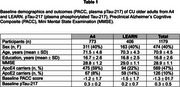 Figure 1
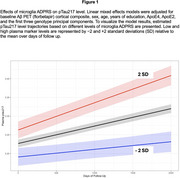 Figure 2
Peer Reviews
No public reviews on file for this paper yet. If you reviewed it on a platform where reviews are public (OpenReview, ICLR, NeurIPS, ICML), you can paste yours below so the community can read it here.
Videos
No videos yet. Explain this paper in a talk, walkthrough, or lecture? Add one.
Taxonomy
TopicsNeuroinflammation and Neurodegeneration Mechanisms · Alzheimer's disease research and treatments · Dementia and Cognitive Impairment Research