Enhancing MCI Assessment: A Digital Trail Making Test with Integrated Eye and Hand Tracking
Gustavo E Juantorena, Waleska Berrios, Maria Cecilia Fernández, Agustin Ibanez, Agustin Petroni, Juan E Kamienkowski

TL;DR
A digital version of the Trail Making Test with eye and hand tracking helps detect cognitive impairments more accurately than traditional methods.
Contribution
Integrating eye and hand tracking into the Trail Making Test reveals new digital biomarkers for Mild Cognitive Impairment.
Findings
MCI patients showed significantly longer scanpaths compared to controls.
Eye and hand movement analysis provides more detailed insights than total completion time.
Fixation patterns differ by trial type but not by subject group.
Abstract
We extended our computerized Trail Making Test (c‐TMT) to investigate deficits in Mild Cognitive Impairment (MCI) compared to neurotypical controls. By integrating hand and eye tracking, we captured fine‐grained movement dynamics, revealing distinct trajectory alterations in MCI patients. These differences suggest potential digital biomarkers, offering a more precise assessment beyond traditional total time measurements. Twenty‐nine MCI patients and 28 age‐ and education‐matched controls (with significant Mini‐Mental Test differences, p < 0.001) were enrolled at Hospital Italiano de Buenos Aires, Argentina, with informed consent. Two practice trials and 20 experimental trials (alternating TMT‐A and TMT‐B) were presented. Stimuli were displayed on a 24‐inch screen. Gaze was recorded from the right eye at 500 Hz using an EyeLink 1000 Plus. The mouse trajectory was displayed in real‐time,…
Click any figure to enlarge with its caption.
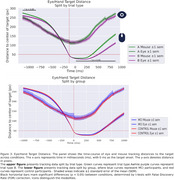 Figure 1
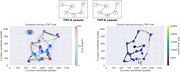 Figure 2
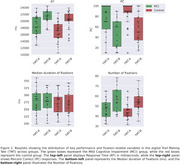 Figure 3
Peer Reviews
No public reviews on file for this paper yet. If you reviewed it on a platform where reviews are public (OpenReview, ICLR, NeurIPS, ICML), you can paste yours below so the community can read it here.
Videos
No videos yet. Explain this paper in a talk, walkthrough, or lecture? Add one.
Taxonomy
TopicsDementia and Cognitive Impairment Research · Functional Brain Connectivity Studies · Balance, Gait, and Falls Prevention