Evaluating the relationship of perivascular spaces with vascular risk factors, amyloid positivity, and cognitive impairment
Swati Rane Levendovszky, Mladen Zecevic, Rebecca J Lepping, Daniel Schwartz, Lisa C Silbert, Sandra A Billinger

TL;DR
This study explores how perivascular spaces in the brain relate to vascular risk factors, amyloid buildup, and cognitive decline, finding a link between PVS burden and amyloid positivity and cognitive impairment.
Contribution
The study provides new evidence that PVS burden is associated with amyloid positivity and cognitive impairment, but not with vascular risk factors.
Findings
PVS burden was significantly higher in amyloid-positive individuals.
PVS burden was significantly higher in cognitively impaired participants.
No vascular risk factors were found to predict PVS burden.
Abstract
Perivascular space (PVS) burden is an emerging MRI marker of cerebrovascular disease and represents enlarged fluid‐filled spaces around blood vessels. It could also indicate stagnated CSF flow that slows amyloid clearance from the brain. Here, we sought to determine which vascular risk factor (BMI, blood pressure, pulse wave velocity) informed PVS burden. We also assessed if PVS burden was associated with amyloid positivity. Finally, we evaluated whether PVS burden was associated with cognitive status. 45 (74±7 years old, 24M) participants from the local ADRC, who underwent MRI and amyloid PET imaging, also participated in a study for pulse wave imaging. Pulse wave ultrasound imaging measures pressure wave propagation through large arteries and is a measure of arterial stiffness. Participants were assigned to two groups: a normal cognition group (N = 15) and a cognitively impaired…
Genes, proteins, chemicals, diseases, species, mutations and cell lines named across the full text — each resolved to its canonical identifier and authoritative record.
Click any figure to enlarge with its caption.
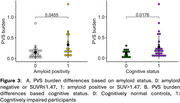 Figure 1
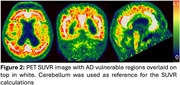 Figure 2
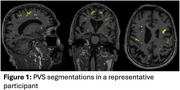 Figure 3
Peer Reviews
No public reviews on file for this paper yet. If you reviewed it on a platform where reviews are public (OpenReview, ICLR, NeurIPS, ICML), you can paste yours below so the community can read it here.
Videos
No videos yet. Explain this paper in a talk, walkthrough, or lecture? Add one.
Taxonomy
TopicsCerebrospinal fluid and hydrocephalus · Intracerebral and Subarachnoid Hemorrhage Research · Dementia and Cognitive Impairment Research