Medial temporal lobe Tau‐Neurodegeneration mismatch from MRI and plasma biomarkers identifies vulnerable and resilient phenotypes with AD
Xueying Lyu, Nidhi S. Mundada, Christopher A Brown, Niyousha Sadeghpour, Emily McGrew, Michael Tran Duong, Long Xie, Mengjin Dong, Yue Li, Ilya M. Nasrallah, Laura E.M. Wisse, Paul A. Yushkevich, Sandhitsu R. Das, David A. Wolk

TL;DR
This study uses MRI and blood tests to identify different Alzheimer's disease patterns, revealing groups that are more or less vulnerable to cognitive decline.
Contribution
A simplified method using plasma ptau217 and MTL MRI to identify AD subphenotypes linked to non-AD factors like LATE-NC.
Findings
Three distinct T-N groups were identified, including a vulnerable group with anterior MTL atrophy and worse cognitive outcomes.
The resilient group showed less atrophy and better cognitive stability, suggesting protection from non-AD pathology.
T-N mismatch patterns correlated with clinical ratings and memory impairment, indicating potential for therapeutic stratification.
Abstract
The heterogeneity of Alzheimer's disease (AD) and lack of well‐validated markers of non‐AD factors (e.g. TDP‐43) present a substantial challenge for therapeutics. Our prior work showed discordance between tau (T) and neurodegeneration (N) identified non‐AD factors in AD through multi‐modality imaging. Here we tried a simplified approach using plasma ptau217 and medial temporal lobe (MTL) morphometry, given this region's common association with co‐pathologies, particularly LATE‐NC. We included 349 ADNI participants (188 cognitively normal, 161 MCI/dementia) with paired T1‐MRI and plasma ptau217. The MTL was segmented into subregions and further parcellated into 100 bilateral super‐points within regional boundaries. T1‐MRI‐derived thickness and amygdala volume represented N, and plasma p‐Tau217 represented T. T‐N residuals, calculated through regression across super‐points and amygdala,…
Genes, proteins, chemicals, diseases, species, mutations and cell lines named across the full text — each resolved to its canonical identifier and authoritative record.
Click any figure to enlarge with its caption.
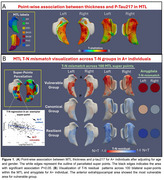 Figure 1
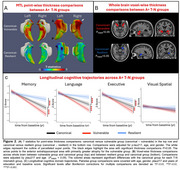 Figure 2
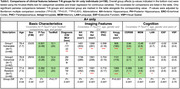 Figure 3
Peer Reviews
No public reviews on file for this paper yet. If you reviewed it on a platform where reviews are public (OpenReview, ICLR, NeurIPS, ICML), you can paste yours below so the community can read it here.
Videos
No videos yet. Explain this paper in a talk, walkthrough, or lecture? Add one.
Taxonomy
TopicsDementia and Cognitive Impairment Research · Functional Brain Connectivity Studies · Alzheimer's disease research and treatments