Frequent at‐home multimodal measurements are more sensitive to progression than the gold‐standard clinic‐based ADAS‐Cog composite scale
Laura M Rueda‐Delgado, Florentine M Barbey, Alison R Buick, Shannon Diggin, John Dyer, Hugh Nolan, James B Rowe, Brian Murphy

TL;DR
Home-based digital tests detect Alzheimer's progression better than traditional clinic assessments, offering more sensitive and frequent monitoring.
Contribution
Home-based multimodal digital assessments show higher sensitivity to Alzheimer's progression than the gold-standard ADAS-Cog scale.
Findings
Two home-based tasks showed significantly larger effect sizes than ADAS-Cog after multiple comparison correction.
Post-hoc analysis revealed separation of p-tau positive and negative patients on specific cognitive tasks.
Frequent home assessments provided more statistical power for detecting progression than infrequent clinic visits.
Abstract
The detection of progression is key to the statistical power of placebo‐controlled clinical trials. This is a challenge in dementia, as disease progression is confounded with natural aging, and as widely used assessments (CDR, ADAS‐Cog) lack sensitivity and are administered only infrequently and in specialist settings. We report a non‐interventional study conducted with 10 pharma companies to evaluate the feasibility and value of capturing repeated multimodal digital assessments with Alzheimer's dementia patients, using the NeuLogiqTM platform in the home over 12 months. The difference in progression between mild dementia and matched controls serves as a model of placebo vs. an efficacious intervention. We quantify the statistical power of NeuLogiq digital measures, relative to conventional endpoints. Seven UK sites recruited Alzheimer's type mild dementia patients (n = 59, ACE‐III…
Genes, proteins, chemicals, diseases, species, mutations and cell lines named across the full text — each resolved to its canonical identifier and authoritative record.
Click any figure to enlarge with its caption.
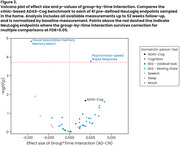 Figure 1
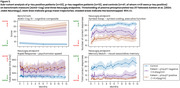 Figure 2
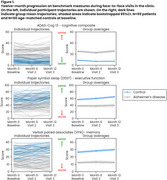 Figure 3
Peer Reviews
No public reviews on file for this paper yet. If you reviewed it on a platform where reviews are public (OpenReview, ICLR, NeurIPS, ICML), you can paste yours below so the community can read it here.
Videos
No videos yet. Explain this paper in a talk, walkthrough, or lecture? Add one.
Taxonomy
TopicsDementia and Cognitive Impairment Research · Neural and Behavioral Psychology Studies · Intensive Care Unit Cognitive Disorders