Cognitive decline investigation using the Centiloid Scale in Florbetaben amyloid PET
Maria Rosa Alves da Silva, Cristiano Aguzzoli, Fabricio Nery Garrafiel, Fernando Jacob Lazzaretti, Lorenza P. Botton, Álvaro De Leonço, Barbara Suman Bahlis, Andressa de Oliveira Felício, Cristina Sebastião Matushita, Ana Maria Marques da Silva, Lucas Porcello Schilling

TL;DR
This study uses the Centiloid Scale to analyze amyloid-beta levels in PET scans of people being evaluated for cognitive decline, aiming to improve accuracy in Alzheimer's diagnosis.
Contribution
The study introduces the use of the Centiloid Scale with Florbetaben PET to classify amyloid-beta burdens and reduce false classifications in Alzheimer's diagnosis.
Findings
33.4% of participants had low βA burden, 15.8% intermediate, and 50.8% high based on CL values.
Binary classification of βA positivity resulted in 40% false negatives when compared to CL-based assessments.
Abstract
Alzheimer´s disease (AD) neuropathology involves the extracellular formation of senile β‐amyloid (βA) plaques and intraneuronal tau phosphorylation, leading to neurofibrillary tangles. βA burden can be detected using biomarkers from cerebrospinal fluid or positron emission tomography (PET) quantification using [18F]Florbetaben (FBB) or [11C]PiB. βA PET quantification can use standard uptake values (SUVR) or the Centiloid (CL) values, which are anchored from 0 to 100, classifying individuals with low βA burden (<20 CL), intermediate (>20 CL and <50 CL) and high (>50 CL). This study aims to analyze the distribution of CL values in FBB PET images acquired in individuals under cognitive decline investigation. A standard processing pipeline was validated using the PMOD PNEURO tool with the GAAIN dataset. After validation, we retrospectively evaluated 266 FBB PET images from individuals…
Genes, proteins, chemicals, diseases, species, mutations and cell lines named across the full text — each resolved to its canonical identifier and authoritative record.
Click any figure to enlarge with its caption.
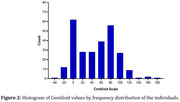 Figure 1
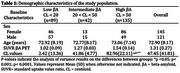 Figure 2
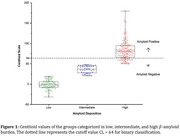 Figure 3
Peer Reviews
No public reviews on file for this paper yet. If you reviewed it on a platform where reviews are public (OpenReview, ICLR, NeurIPS, ICML), you can paste yours below so the community can read it here.
Videos
No videos yet. Explain this paper in a talk, walkthrough, or lecture? Add one.
Taxonomy
TopicsDementia and Cognitive Impairment Research · Intracerebral and Subarachnoid Hemorrhage Research · Alzheimer's disease research and treatments