NODDI reveals white matter microstructural changes in isolated REM sleep behavior disorder
Elijah Mak, Scott A. Przybelski, Robert I. Reid, Angela J Fought, Christopher G Schwarz, Prashanthi Vemuri, Clifford R. Jack, Yuzheng Nie, Hernis De La Cruz, Alon Y Avidan, Donald Bliwise, Meghan Campbell, Susan Criswell, Albert A Davis, Kevin Duff, Kaylena Ehgoetz Martens

TL;DR
This study uses advanced MRI to show early white matter changes in people with REM sleep behavior disorder, linking these changes to motor performance.
Contribution
The study introduces NODDI as a more specific tool to detect early white matter changes in iRBD compared to traditional DTI.
Findings
iRBD participants showed widespread and bidirectional white matter changes compared to controls.
NODDI metrics revealed complex patterns of increased and decreased values in white matter tracts.
Both DTI and NODDI metrics correlated with motor performance tests like the Purdue Pegboard.
Abstract
Isolated REM sleep behavior disorder (iRBD) is a parasomnia that reflects an evolving α‐synucleinopathy disorder, providing an opportunity to study early pathological changes. While diffusion tensor imaging (DTI) studies have shown white matter changes in iRBD, Neurite Orientation Dispersion and Density Imaging (NODDI) may offer better biological specificity in characterizing microstructural alterations through measures of Neurite Density Index (NDI), Orientation Dispersion Index (ODI), and Free Water Fraction (FWF). We included 77 participants with polysomnography‐confirmed iRBD from the North American Prodromal Synucleinopathy (NAPS) Consortium and 154 age‐ and sex‐matched cognitively unimpaired controls from the Mayo Clinic Study of Aging. White matter microstructure was evaluated using standardized multi‐shell diffusion on 3T MRI, quantifying DTI metrics (fractional anisotropy, FA;…
Genes, proteins, chemicals, diseases, species, mutations and cell lines named across the full text — each resolved to its canonical identifier and authoritative record.
Click any figure to enlarge with its caption.
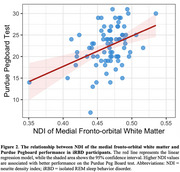 Figure 1
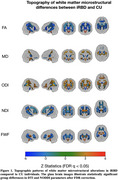 Figure 2
Peer Reviews
No public reviews on file for this paper yet. If you reviewed it on a platform where reviews are public (OpenReview, ICLR, NeurIPS, ICML), you can paste yours below so the community can read it here.
Videos
No videos yet. Explain this paper in a talk, walkthrough, or lecture? Add one.
Taxonomy
TopicsParkinson's Disease Mechanisms and Treatments · Sleep and Wakefulness Research · Epilepsy research and treatment