Aβ‐dependent trajectories of Braak stages for MK6240 and Flortaucipir tau PET
Bruna Bellaver, Guilherme Povala, Pamela C.L. Ferreira, Guilherme Bauer‐Negrini, Firoza Z Lussier, Livia Amaral, Andreia Rocha, Joseph C. Masdeu, Dana L Tudorascu, Thomas K Karikari, David N. Soleimani‐Meigooni, Juan Fortea, Val J Lowe, Hwamee Oh, Belen Pascual, Brian A. Gordon

TL;DR
This study compares how two tau PET tracers detect tau accumulation in Alzheimer's disease, showing that MK6240 identifies tau pathology at earlier stages than Flortaucipir.
Contribution
The study reveals distinct Aβ-dependent trajectories of Braak staging using MK6240 and Flortaucipir, suggesting MK6240 detects tau pathology earlier.
Findings
Plasma GFAP was the earliest biomarker to show abnormality at 11 Centiloids.
MK6240 follows Braak stage-like progression, with Braak I becoming positive at 22 Centiloids.
Flortaucipir first detects Braak IV at 50 Centiloids, and Braak VI did not reach positivity in the study population.
Abstract
Tau accumulation in the brain is postulated to follow a hierarchical pattern, known as Braak staging, originally defined in postmortem brains. PET‐based Braak stages have since been proposed, however, tau PET tracers exhibit distinct binding characteristics that might influence the detectable trajectories of tau accumulation and its relationship with other biomarkers across the AD continuum. In a head‐to‐head study, we investigated the emergence of tau positivity in each Braak region, along with plasma p‐tau217 and GFAP, as a function of Aβ PET deposition. We evaluated 352 individuals from the HEAD study (205 cognitively unimpaired and 147 cognitively impaired) with head‐to‐head Aβ PET, MK6240 and Flortaucipir tau PET, and plasma p‐tau217 (ALZpath) and GFAP (Quanterix) measures. Tau PET Braak regions, plasma p‐tau217 and GFAP trajectories were modeled as functions of Aβ burden…
Genes, proteins, chemicals, diseases, species, mutations and cell lines named across the full text — each resolved to its canonical identifier and authoritative record.
Click any figure to enlarge with its caption.
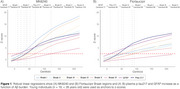 Figure 1
Peer Reviews
No public reviews on file for this paper yet. If you reviewed it on a platform where reviews are public (OpenReview, ICLR, NeurIPS, ICML), you can paste yours below so the community can read it here.
Videos
No videos yet. Explain this paper in a talk, walkthrough, or lecture? Add one.
Taxonomy
TopicsDementia and Cognitive Impairment Research · Functional Brain Connectivity Studies · Epilepsy research and treatment