Uncovering regional atrophy not explained by tau deposition using Additional Pathology Inference (AddiPath)
Lawrence P Binding, Mihaela Croitor, Christopher S Parker, Isaac Llorente Saguer, Neil P Oxtoby, Daniel C Alexander, Alexandra L Young

TL;DR
This paper introduces AddiPath, a new method to detect brain atrophy caused by pathologies other than tau in Alzheimer's disease, which could help improve clinical trial design.
Contribution
AddiPath is a novel computational method to infer additional pathologies contributing to brain atrophy beyond tau deposition.
Findings
AddiPath identified a progression pattern of additional pathology starting in the entorhinal cortex and spreading to the medial temporal lobe and cortex.
AddiPath stages correlated with worse memory, language, and executive function scores but were unrelated to tau load.
The method could help distinguish non-tau-related atrophy, potentially indicating TDP-43 pathology.
Abstract
Mixed pathology is prevalent in Alzheimer's disease (AD) but difficult to detect in vivo as biomarkers for several additional pathologies are in their infancy. Cortical thickness (CT) atrophy reflects both tau deposition and additional pathologies (e.g., TDP‐43). Specific biomarkers like tau‐PET may help disentangle these contributions. We introduce Additional Pathology Inference (AddiPath), software designed to identify disease biomarker changes not explained by primary pathology, and apply it to identify CT changes unexplained by tau deposition on tau‐PET. Paired tau‐PET and CT data from 444 ADNI subjects across 8 bilateral meta‐regions were analysed. Subtype and Stage Inference (SuStaIn) applied to tau‐PET data identified tau pathology subtypes with distinct progression patterns. AddiPath was then applied to learn the relative contributions of tau and additional pathology to…
Genes, proteins, chemicals, diseases, species, mutations and cell lines named across the full text — each resolved to its canonical identifier and authoritative record.
Click any figure to enlarge with its caption.
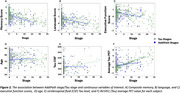 Figure 1
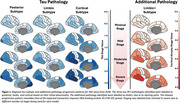 Figure 2
 Figure 3
Peer Reviews
No public reviews on file for this paper yet. If you reviewed it on a platform where reviews are public (OpenReview, ICLR, NeurIPS, ICML), you can paste yours below so the community can read it here.
Videos
No videos yet. Explain this paper in a talk, walkthrough, or lecture? Add one.
Taxonomy
TopicsDementia and Cognitive Impairment Research · Alzheimer's disease research and treatments · Functional Brain Connectivity Studies