Imaging‐neuropathology evaluation of Amyloid Related Imaging Abnormality sulcal effusion in a DIAN‐TU‐001 participant treated with gantenerumab
Nelly Joseph‐Mathurin, Charles D Chen, Diana A Hobbs, Meng Jiang, Shaney Flores, Jalen Scott, Sanjana Anand, Erin E. Franklin, Ruijin Lu, Brian A. Gordon, Clifford R. Jack, Carlos Cruchaga, Jason J. Hassenstab, Laura Ibanez, Yan Li, Guoqiao Wang, Alan E. Renton, Chengjie Xiong

TL;DR
This study examines the link between ARIA-E episodes and amyloid-beta removal in a person with Alzheimer's disease treated with gantenerumab.
Contribution
The study provides neuropathological evidence linking ARIA-E with localized amyloid-beta reduction observed through imaging.
Findings
ARIA-E episodes correlated with decreased PiB-PET uptake and lower amyloid-beta levels in affected brain regions.
Changes in PiB-PET and amyloid-beta were specific to ARIA-E areas, with no significant changes in tauopathy or glial markers.
The findings support a connection between ARIA-E, PiB-PET changes, and amyloid-beta removal confirmed at autopsy.
Abstract
Amyloid related imaging abnormality edema (ARIA‐E) occurs in about 19% of individuals with autosomal dominant Alzheimer disease (ADAD) treated with an anti‐amyloid‐b monoclonal antibody (Salloway et al., 2021). In a previously reported case, ARIA‐E appeared to colocalize with decreases in PiB‐PET uptake (Joseph‐Mathurin, Llibre‐Guerra, et al, 2022), suggesting an association between amyloid‐b (Aβ) removal and ARIA‐E. Here, we compare longitudinal neuroimaging and corresponding neuropathology in an ADAD individual treated with gantenerumab, who experienced multiple ARIA‐E episodes as sulcal effusions that resolved by the end of the four‐year trial. PiB‐PET and MRI were collected pre‐ and post‐randomization (2 and 4 years). The participant consented to brain donation, which was received a year after trial completion. Four tissue samples were taken from the location of the ARIA‐E in the…
Genes, proteins, chemicals, diseases, species, mutations and cell lines named across the full text — each resolved to its canonical identifier and authoritative record.
Click any figure to enlarge with its caption.
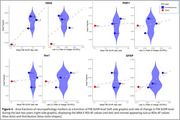 Figure 1
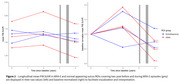 Figure 2
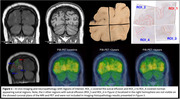 Figure 3
Peer Reviews
No public reviews on file for this paper yet. If you reviewed it on a platform where reviews are public (OpenReview, ICLR, NeurIPS, ICML), you can paste yours below so the community can read it here.
Videos
No videos yet. Explain this paper in a talk, walkthrough, or lecture? Add one.
Taxonomy
TopicsIntracerebral and Subarachnoid Hemorrhage Research · Alzheimer's disease research and treatments · Dementia and Cognitive Impairment Research