Prediction of Longitudinal Changes in Hippocampal and Parahippocampal Structures: An Interpretable Bayesian Analysis in Alzheimer's Disease
Ratnadeep Das, Atri Chatterjee, Sitikantha Roy

TL;DR
This study uses a Bayesian GRU model to predict hippocampal and parahippocampal volume changes in Alzheimer's patients over two years, aiding in prognosis and treatment evaluation.
Contribution
The novel contribution is the application of a GRU-BEND model with Bayesian inference for interpretable longitudinal predictions in Alzheimer's disease.
Findings
The model accurately predicted hippocampal and parahippocampal volume changes with MAPE between 4.3% and 6.6%.
Left hippocampus volume predictions were most accurate, with MAE of 0.039±0.002 for the third year.
CDR-SB and MMSE had minimal impact, while amygdala and ventricle volumes were least influential in hippocampus predictions.
Abstract
Alzheimer's disease is characterized by progressive atrophy of hippocampus and parahippocampal structures including entorhinal cortex and parahippocampal gyrus. Predicting longitudinal volume changes remains challenging as they can occur due to normal ageing and disease progression. From the ADNI dataset (n = 480), we used two years of baseline data including demographics, cognitive assessment scores (CDR‐SB, MMSE), and FreeSurfer‐extracted MRI measurements to predict third and fourth‐year Hippocampus volume, parahippocampal volume and thickness. We employed a GRU‐based Bayesian Encoder‐Decoder architecture (GRU‐BEND) with a 70:10:20 train‐validation‐test split. We evaluated our model over five‐fold cross‐validation and used the Integrated Gradient method for feature importance analysis. Figure 1 shows the degradation of the region's volumes over the year for different diagnosis…
Genes, proteins, chemicals, diseases, species, mutations and cell lines named across the full text — each resolved to its canonical identifier and authoritative record.
Click any figure to enlarge with its caption.
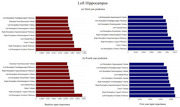 Figure 1
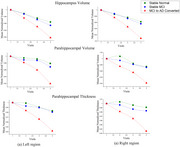 Figure 2
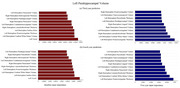 Figure 3
Peer Reviews
No public reviews on file for this paper yet. If you reviewed it on a platform where reviews are public (OpenReview, ICLR, NeurIPS, ICML), you can paste yours below so the community can read it here.
Videos
No videos yet. Explain this paper in a talk, walkthrough, or lecture? Add one.
Taxonomy
TopicsDementia and Cognitive Impairment Research · Alzheimer's disease research and treatments · Functional Brain Connectivity Studies