Tau exacerbates the development of motor disturbances but has no effect on the development of irritability across the Braak stages – The HEAD Study
Cristiano Aguzzoli, Guilherme Povala, Pamela C.L. Ferreira, Firoza Z Lussier, Guilherme Bauer‐Negrini, Livia Amaral, Carolina Soares, Marina Scop Medeiros, João Pedro Ferrari‐Souza, Bruna Bellaver, Hussein Zalzale, Francieli Rohden, Douglas Teixeira Leffa

TL;DR
This study finds that tau protein is linked to motor disturbances in Alzheimer's disease but not to irritability, across different stages of the disease.
Contribution
The study identifies a specific role of tau in motor disturbances but not irritability, offering new insights into Alzheimer's symptom progression.
Findings
Tau is associated with motor disturbances across Braak stages in Alzheimer's disease.
Irritability does not correlate with tau pathology at any Braak stage.
Removing irritability from models strengthens the association between tau and other neuropsychiatric symptoms.
Abstract
Previous studies demonstrated an association between tau pathology and the development of neuropsychiatric symptoms (NPS) in individuals with Alzheimer's disease (AD). However, the extent to which tau influences each specific NPS domain remains unclear. Here, we aim to investigate the association of tau and each NPS domain in the AD continuum. We hypothesized that tau plays a comparatively greater effect on the emergence of hyperactive and psychotic symptoms compared to other NPS domains. We assessed 385 individuals (216 cognitively unimpaired (CU), 128 MCI, and 41 AD dementia) from the HEAD study who underwent clinical assessments with the Neuropsychiatry Inventory Questionnaire (NPI‐Q) and had positron emission tomography (PET) for amyloid‐β (Aβ) ([18F]AZD4694 or [11C]PiB), and tau tangles ([18F]MK6240) at the same visit. Tau SUVR values were tailored with a mask from Braak stages…
Genes, proteins, chemicals, diseases, species, mutations and cell lines named across the full text — each resolved to its canonical identifier and authoritative record.
Click any figure to enlarge with its caption.
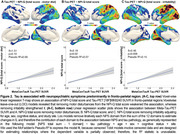 Figure 1
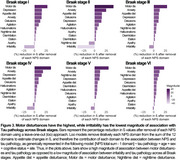 Figure 2
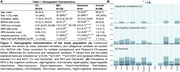 Figure 3
Peer Reviews
No public reviews on file for this paper yet. If you reviewed it on a platform where reviews are public (OpenReview, ICLR, NeurIPS, ICML), you can paste yours below so the community can read it here.
Videos
No videos yet. Explain this paper in a talk, walkthrough, or lecture? Add one.
Taxonomy
TopicsDementia and Cognitive Impairment Research · Alzheimer's disease research and treatments · Traumatic Brain Injury Research