The utility of plasma p‐tau217 in former American football players at risk for chronic traumatic encephalopathy
Annalise E. Miner, Nicholas J. Ashton, Henrik Zetterberg, Kaj Blennow, Jenna R. Groh, Yorghos Tripodis, Charles Adler, Laura Balcer, Charles B. Bernick, Elaine R. Peskind, Breton M. Asken, Jeremy A. Tanner, Gil D. Rabinovici, Sarah J Banks, William B. Barr, Jennifer V. Wethe

TL;DR
This study explores plasma p-tau217 as a potential biomarker for chronic traumatic encephalopathy (CTE) in former American football players.
Contribution
The study evaluates the utility of plasma p-tau217 in detecting CTE pathology and its concordance with Aβ pathology in an at-risk population.
Findings
Plasma p-tau217 concentrations were higher in former football players compared to controls.
Higher p-tau217 was associated with higher Aβ-PET SUVR in football players.
False Aβ-positives were identified, including Aβ- participants with high p-tau217.
Abstract
In vivo biomarkers that can detect long‐term neuropathologies from repetitive head impact (RHI) exposure are needed, especially for the neurodegenerative tauopathy chronic traumatic encephalopathy (CTE). Here, we evaluated plasma p‐tau217 as a potential biomarker for CTE p‐tau pathology, and examined the concordance between plasma p‐tau217 and Aβ pathology in an at‐risk for CTE sample. The sample included 180 male former football players (120 professional, 60 college), and 56 asymptomatic men without RHI (i.e., controls). Participants completed blood draws, 18F‐florbetapir (Aβ+=SUVR≥1.10), and 18F‐flortaucipir PET. Traumatic encephalopathy syndrome (TES) diagnoses were made. Single molecule array for plasma p‐tau217 (ALZpath) was performed (≥0.6 cutoff used to maximize sensitivity). Nine participants had post‐mortem tissue. ANCOVA examined group differences in p‐tau217 (football vs…
Genes, proteins, chemicals, diseases, species, mutations and cell lines named across the full text — each resolved to its canonical identifier and authoritative record.
Click any figure to enlarge with its caption.
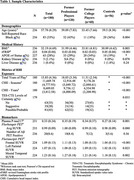 Figure 1
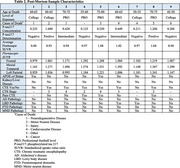 Figure 2
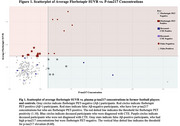 Figure 3
Peer Reviews
No public reviews on file for this paper yet. If you reviewed it on a platform where reviews are public (OpenReview, ICLR, NeurIPS, ICML), you can paste yours below so the community can read it here.
Videos
No videos yet. Explain this paper in a talk, walkthrough, or lecture? Add one.
Taxonomy
TopicsTraumatic Brain Injury Research · Traumatic Brain Injury and Neurovascular Disturbances · S100 Proteins and Annexins