SpectrisTM combined audiovisual sensory stimulation elicits stronger EEG brain response than auditory or visual stimulation alone
Chandran V Seshagiri, Brennan L Jackson, Miguel Hernandez, Julia M Leach, Ralph Kern, Alyssa Boasso, Mihaly Hajos

TL;DR
A medical device called Spectris that uses combined sound and light stimulation produces stronger brain responses than sound or light alone in people with Alzheimer's.
Contribution
The study shows combined audiovisual stimulation elicits stronger and broader gamma brain responses than either modality alone.
Findings
Audiovisual stimulation produced the highest average global gamma response (10.73 dB) compared to auditory (7.39 dB) and visual (10.01 dB).
Audiovisual stimulation activated more EEG channels (24) above a 6 dB threshold than auditory (21) or visual (22).
The gamma response was significantly stronger for audiovisual vs. auditory stimulation but not for audiovisual vs. visual.
Abstract
The recent Overture (NCT03556280) clinical trial demonstrated reduced decline in cognitive and functional abilities and reduced brain atrophy in participants with mild to moderate Alzheimer's disease (AD) after 6‐months of daily, at‐home treatment with Cognito Therapeutics’ Spectris™ investigational medical device (Hajós et al. 2024). Spectris uses auditory and visual sensory stimulation to evoke gamma‐frequency steady‐state oscillations. Here, we evaluate the acute EEG response to auditory and visual stimulation separately and compare with combined audiovisual stimulation. All Overture participants underwent a screening EEG that included measurements of response to Spectris auditory, visual and audiovisual stimulation. Volume and brightness levels were matched for all stimulation within a subject. EEG was collected using gel caps (ANT‐Neuro, Philadelphia, PA) from 30 channels (10/20).…
Genes, proteins, chemicals, diseases, species, mutations and cell lines named across the full text — each resolved to its canonical identifier and authoritative record.
Click any figure to enlarge with its caption.
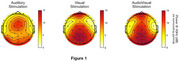 Figure 1
Peer Reviews
No public reviews on file for this paper yet. If you reviewed it on a platform where reviews are public (OpenReview, ICLR, NeurIPS, ICML), you can paste yours below so the community can read it here.
Videos
No videos yet. Explain this paper in a talk, walkthrough, or lecture? Add one.
Taxonomy
TopicsNeural dynamics and brain function · Multisensory perception and integration · Dementia and Cognitive Impairment Research