Use of a multimarker blood test in the heterogenous memory clinic setting: an updated and simplified interpretation tool
Inge M.W. Verberk, Michelle C. Barboure, Sinthujah Vigneswaran, Lynn Boonkamp, Calvin Trieu, Elsmarieke van de Giessen, Afina W. Lemstra, Yolande A.L. Pijnenburg, Wiesje M. van der Flier, Martijn Schut, Anouk den Braber, David H Wilson, Argonde C. van Harten

TL;DR
This paper introduces a simplified tool to interpret blood test results for dementia diagnosis, using multiple biomarkers to improve accuracy in memory clinics.
Contribution
The paper presents an updated and simplified multi-marker interpretation tool for blood-based biomarkers in dementia diagnosis.
Findings
The combination of p-tau217 and age-corrected NfL provided AUCs ranging from 0.85 to 0.93 across clinical questions.
The visualization tool helps clinicians interpret plasma biomarker results and determine etiological diagnoses.
Grey zones for result interpretation were generally small, increasing confidence in using the tool in routine practice.
Abstract
Patients referred to specialized memory clinics present with different symptoms and etiologies. A blood test could streamline establishing etiological diagnoses. Given the diversity in patients seen at memory clinics, relying on a single marker, e.g. phosphorylated tau217 (pTau217), is insufficient. However, multi‐marker interpretation in the clinical context is challenging. We aim to provide a comprehensive multi‐marker interpretation tool. We follow up on our published work (Verberk, Alz&Dem, 2024) in which we presented a result visualization approach for p‐tau181, glial fibrillary acidic protein (GFAP) and neurofilament light (NfL). We now extended our cohort to n = 1773 Amsterdam Dementia Cohort participants with diagnosis established by clinical consensus according to applicable criteria (table 1) and measured p‐tau217 (Simoa Janssen) in addition to amyloid‐beta (Abeta)42/40, GFAP…
Genes, proteins, chemicals, diseases, species, mutations and cell lines named across the full text — each resolved to its canonical identifier and authoritative record.
Click any figure to enlarge with its caption.
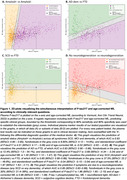 Figure 1
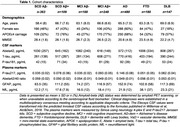 Figure 2
Peer Reviews
No public reviews on file for this paper yet. If you reviewed it on a platform where reviews are public (OpenReview, ICLR, NeurIPS, ICML), you can paste yours below so the community can read it here.
Videos
No videos yet. Explain this paper in a talk, walkthrough, or lecture? Add one.
Taxonomy
TopicsDementia and Cognitive Impairment Research · Alzheimer's disease research and treatments · Amyotrophic Lateral Sclerosis Research