Biomarker‐Driven Patterns of Hippocampal Subfield Atrophy in Amnestic Mild Cognitive Impairment
Andrei Bieger, Wyllians Vendramini Borelli, João Pedro Ferrari‐Souza, Wagner S. Brum, Thomas Hugentobler Schlickmann, Daniel Arnold, Tharick A Pascoal, Diogo O. Souza, Cristiano Aguzzoli, Pedro Rosa‐Neto, Lucas Porcello Schilling, Eduardo R. Zimmer

TL;DR
This study identifies distinct patterns of hippocampal atrophy in amnestic MCI based on amyloid and tau biomarker profiles, suggesting potential for early Alzheimer's detection.
Contribution
The study reveals novel subfield-specific atrophy patterns linked to amyloid and tau biomarker profiles in early Alzheimer's disease.
Findings
The A-T+ group showed faster atrophy in the subiculum bilaterally, indicating tau pathology's specific impact.
The A+T+ group exhibited widespread atrophy across multiple hippocampal subfields, suggesting combined amyloid and tau pathology leads to broader degeneration.
Subfield-specific atrophy patterns may serve as sensitive biomarkers for differentiating early Alzheimer's stages.
Abstract
Hippocampal atrophy is a well‐established hallmark of Alzheimer's disease (AD), closely associated with cognitive decline and disease progression, even in the earliest symptomatic stages. Despite growing evidence that subfield‐specific atrophy patterns could serve as sensitive biomarkers for early diagnosis and tracking disease progression, there remains a significant gap in understanding how these subfields are differentially impacted across different stages of AD. In this study, we explore longitudinal rates of atrophy in hippocampal subfields in individuals with amnestic mild cognitive impairment (MCI). Hippocampal subfields volumes were extracted from volumetric, T1‐weighted MRI images from the Alzheimer's Disease Neuroimaging Initiative using Freesurfer (v 7.4.1). We included individuals with MCI who underwent cerebrospinal fluid (CSF) collection and MRI studies at baseline and…
Genes, proteins, chemicals, diseases, species, mutations and cell lines named across the full text — each resolved to its canonical identifier and authoritative record.
Click any figure to enlarge with its caption.
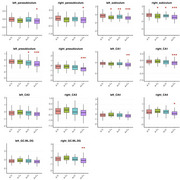 Figure 1
 Figure 2
Peer Reviews
No public reviews on file for this paper yet. If you reviewed it on a platform where reviews are public (OpenReview, ICLR, NeurIPS, ICML), you can paste yours below so the community can read it here.
Videos
No videos yet. Explain this paper in a talk, walkthrough, or lecture? Add one.
Taxonomy
TopicsDementia and Cognitive Impairment Research · Alzheimer's disease research and treatments · Memory and Neural Mechanisms