Longitudinal Sex Differences in Excitation–Inhibition Balance in Alzheimer's Disease Risk: A Multimodal Neuroimaging Study
Andrew P Burns, Igor Fortel, Liang Zhan, Orly Lazarov, Scott R. Mackin, Alexander P Demos, Barbara B. Bendlin, Alex Leow

TL;DR
This study finds that women with a specific genetic risk for Alzheimer's show increasing brain hyperexcitation over time, suggesting a need for targeted prevention strategies.
Contribution
The study provides longitudinal evidence of sex-specific E/I dysregulation in APOE-ε4 carriers, using a multimodal neuroimaging approach.
Findings
Female APOE-ε4 carriers showed a significantly elevated hyperexcitable EIR trajectory over time.
Higher baseline excitatory tone was found in females in default mode and limbic networks.
The effect remained significant after adjusting for age, time, and amyloid status.
Abstract
Excessive neural hyperexcitation has been implicated in early cognitive decline and progression to Alzheimer's disease (AD). Restoring the balance between excitation and inhibition (E/I) with interventions like levetiracetam may offer clinical benefits, particularly for those at heightened risk. Recent cross‐sectional studies suggest that female APOE‐ε4 carriers may be especially vulnerable to hyperexcitation, but longitudinal evidence remains limited. We therefore investigated whether E/I dysregulation over time differs by sex and APOE‐ε4 status in older adults who were cognitively unimpaired at baseline. Figure 1 illustrates the concept of early hyperexcitation preceding AD symptoms. We analyzed multimodal MRI data (resting‐state functional MRI and diffusion‐weighted imaging) from 106 older adults with at least one cognitively unimpaired scan and three or more longitudinal sessions.…
Genes, proteins, chemicals, diseases, species, mutations and cell lines named across the full text — each resolved to its canonical identifier and authoritative record.
Click any figure to enlarge with its caption.
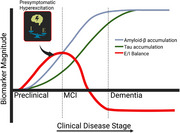 Figure 1
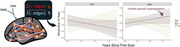 Figure 2
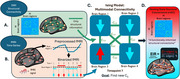 Figure 3
Peer Reviews
No public reviews on file for this paper yet. If you reviewed it on a platform where reviews are public (OpenReview, ICLR, NeurIPS, ICML), you can paste yours below so the community can read it here.
Videos
No videos yet. Explain this paper in a talk, walkthrough, or lecture? Add one.
Taxonomy
TopicsFunctional Brain Connectivity Studies · Dementia and Cognitive Impairment Research · Traumatic Brain Injury Research