Decreased Audio‐Visual Network Integration Mediates Amyloid‐related Tau Spreading
Jieying Li, Lin Gan, Gleb Bezgin, Tevy Chan, Brandon J Hall, Nesrine Rahmouni, Yi‐Ting Wang, Etienne Aumont, Seyyed Ali Hosseini, Kely Monica Quispialaya Socualaya, Lydia Trudel, Joseph Therriault, Arthur C. Macedo, Jaime Fernandez Arias, Yansheng Zheng, Delphine Olivia‐Lopez

TL;DR
This study shows that reduced integration between auditory and visual brain networks helps spread tau pathology linked to amyloid in early Alzheimer's disease.
Contribution
The study identifies audio-visual network integration as a mediator of amyloid-related tau spreading in early Alzheimer's.
Findings
A+T+ participants showed lower module allegiance in auditory and visual networks compared to A−T− participants.
Reduced integration between auditory and visual networks correlated with increased tau and amyloid levels in early Braak stages.
Audio-visual network integration mediated the relationship between amyloid and tau accumulation in early disease stages.
Abstract
Growing evidence indicates that the coexistence of visual and auditory impairments increases the risk of developing Alzheimer's disease (AD). However, the mechanisms through which these sensory deficits influence the progression of AD, particularly their impact on amyloid and tau pathology, remain unclear. We hypothesize that alterations in the audio‐visual dynamic network play a critical role in mediating the spread of amyloid‐related tau pathology during the early stages of AD. This study included multimodal imaging data, including functional MRI, [18F]NAV4694 amyloid‐PET, and [18F]NAV4694 tau‐PET, from the TRIAD cohort (n = 216, Table 1). Participants were classified as amyloid‐beta (Aβ) positive (A+) or negative (A−) based on established global uptake values of [18F]NAV4694 (global standardized uptake value ratio [SUVR] > 1.55). Tau positivity (T+) or negativity (T−) was determined…
Genes, proteins, chemicals, diseases, species, mutations and cell lines named across the full text — each resolved to its canonical identifier and authoritative record.
Click any figure to enlarge with its caption.
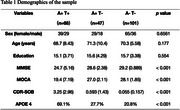 Figure 1
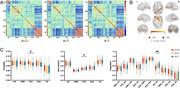 Figure 2
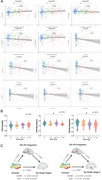 Figure 3
Peer Reviews
No public reviews on file for this paper yet. If you reviewed it on a platform where reviews are public (OpenReview, ICLR, NeurIPS, ICML), you can paste yours below so the community can read it here.
Videos
No videos yet. Explain this paper in a talk, walkthrough, or lecture? Add one.
Taxonomy
TopicsMultisensory perception and integration · Functional Brain Connectivity Studies · Hearing, Cochlea, Tinnitus, Genetics