Remote detection of Alzheimer's disease pathology using a digital sleep and circadian biomarker: an InSleep46 study
Josh King‐Robson, Eyal Soreq, Molly R E Cartlidge, Matthew Harrison, Heidi Murray‐Smith, Lina Aimola, Marie Poole, Ríona Mc Ardle, Ashvini Keshavan, David M Cash, William Coath, Louise Robinson, David J Sharp, Jonathan M Schott

TL;DR
This study shows that a sleep-tracking device can help detect early signs of Alzheimer's disease in older adults.
Contribution
A digital sleep biomarker was developed to remotely detect Alzheimer's pathology with accuracy comparable to blood tests.
Findings
A sleep model identified Braak3+ tau pathology with an AUROC of 0.75.
The model's performance was comparable to plasma pTau217 for detecting Alzheimer's pathology.
The study collected over 174 years of sleep data from 161 participants aged ~78.
Abstract
Sleep and circadian disruption are associated with increased dementia risk. Digital sleep biomarkers may provide an ecologically valid and low‐burden means of remote population‐level screening for incipient dementia. We explored the feasibility and predictive value of a digital sleep biomarker, developed from data collected using the Withings Sleep Analyzer (WSA), a ballistocardiographic under‐mattress pressure sensor which collects sleep and physiological data unobtrusively, to detect Alzheimer‐related biomarkers in a presymptomatic cohort. Participants from the Insight 46 study (all born in March 1946) underwent serial assessment, including plasma phosphorylated tau (pTau)217 ALZpath and 18F‐Florbetapir β‐amyloid PET at age ∼73 and 18F‐MK‐6240 Tau PET at age ∼77. Amyloid status (‐/+) and Tau Braak staging (‐/Braak1+/Braak3+) were derived using automated pipelines. The WSA was…
Genes, proteins, chemicals, diseases, species, mutations and cell lines named across the full text — each resolved to its canonical identifier and authoritative record.
Click any figure to enlarge with its caption.
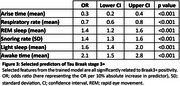 Figure 1
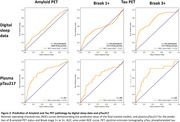 Figure 2
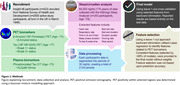 Figure 3
Peer Reviews
No public reviews on file for this paper yet. If you reviewed it on a platform where reviews are public (OpenReview, ICLR, NeurIPS, ICML), you can paste yours below so the community can read it here.
Videos
No videos yet. Explain this paper in a talk, walkthrough, or lecture? Add one.
Taxonomy
TopicsSleep and related disorders · Obstructive Sleep Apnea Research · Sleep and Wakefulness Research