Refining early tau‐PET staging using CA1 and prosubiculum rather than the whole hippocampus
Etienne Aumont, Seyyed Ali Hosseini, Brandon J Hall, Tevy Chan, Lydia Trudel, Jaime Fernandez Arias, Joseph Therriault, Nesrine Rahmouni, Gleb Bezgin, Jenna Stevenson, Stijn Servaes, Arthur C. Macedo, Serge Gauthier, Pedro Rosa‐Neto

TL;DR
This study shows that focusing on specific hippocampal regions improves the accuracy of tau PET imaging for detecting early tau pathology.
Contribution
A novel ROI approach using CA1 and prosubiculum improves tau staging accuracy over the whole hippocampus method.
Findings
Using CA1 and prosubiculum reduced discordant cases by 65% compared to the whole hippocampus method.
False positives were linked to off-target binding in the choroid plexus, which the new method avoids.
The new method better captures CA1-specific tau signals missed by the whole hippocampus approach.
Abstract
Early tau positron emission tomography (PET) regions of interest (ROIs) either consider the whole hippocampus or wholly excludes it. However, only the cornu ammonis 1 (CA1) and prosubiculum are specifically afflicted by tau pathology in histopathological examinations (1). In this study, we propose a novel approach that aligns with the known distribution of tau in the hippocampus compared with the traditional, whole hippocampus approach. We quantified the tau neurofibrillary tangle distribution using [18F]MK6240 in 842 images from 432 participants aged 55 and over. Tau staging was established using ROI thresholds based on 2.5 standard deviations above 40 young adults (aged 18‐25). Participants were classified as discordant if they met the threshold for a given stage without fulfilling the criteria for a previous stage. We generated two alternative Braak stages based on 1) the classical…
Genes, proteins, chemicals, diseases, species, mutations and cell lines named across the full text — each resolved to its canonical identifier and authoritative record.
Click any figure to enlarge with its caption.
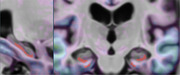 Figure 1
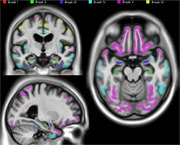 Figure 2
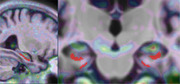 Figure 3
Peer Reviews
No public reviews on file for this paper yet. If you reviewed it on a platform where reviews are public (OpenReview, ICLR, NeurIPS, ICML), you can paste yours below so the community can read it here.
Videos
No videos yet. Explain this paper in a talk, walkthrough, or lecture? Add one.
Taxonomy
TopicsDementia and Cognitive Impairment Research · Alzheimer's disease research and treatments · Memory and Neural Mechanisms