Associations between brain and cognitive resilience, tau load and extent in Alzheimer's disease
Stuart William Mitchell, Tevy Chan, Lydia Trudel, Seyyed Ali Hosseini, Arthur C. Macedo, Marina P Gonçalves, Nesrine Rahmouni, Brandon J Hall, Kely Monica Quispialaya Socualaya, Joseph Therriault, Stijn Servaes, Gleb Bezgin, Yansheng Zheng, Etienne Aumont, Yi‐Ting Wang

TL;DR
This study explores how brain and cognitive resilience relate to tau pathology in Alzheimer's disease, finding that a measure called SEOT may better predict cognitive decline than traditional methods.
Contribution
The study introduces SEOT as a potentially more sensitive biomarker for cognitive decline in Alzheimer's disease compared to SUVR.
Findings
Whole Cortex SEOT shows a stronger negative correlation with MMSE scores than SUVR, suggesting it is a more sensitive marker of cognitive decline.
MCI patients maintain higher MMSE scores despite tau accumulation, while AD patients show greater variability and decline.
SEOT may serve as a more effective biomarker for tracking disease progression in Alzheimer's and MCI.
Abstract
Brain and cognitive resilience (BR, CR) reflect the capacity to maintain structural integrity and cognitive function despite pathological tau deposition in Alzheimer's disease (AD). Tau pathology can be characterized in terms of spatial extent of tauopathy (SEOT) or load using standardized uptake value ratio (SUVR). The aim was to compare SEOT and SUVR in their association with BR and CR. To replicate findings from Ossenkoppele et al. (2020) using MK‐6240 PET imaging and evaluate demographic, genetic, and imaging factors associated with BR and CR. The objective of this study is to assess the value of SEOT metrics in resilience models and compare their predictive power to standardized uptake value ratio (SUVR) and to evaluate cross sectional interactions between tau pathology, cognitive resilience, and cognitive decline. We assessed 126 amyloid‐β‐positive participants TRIAD cohort with…
Genes, proteins, chemicals, diseases, species, mutations and cell lines named across the full text — each resolved to its canonical identifier and authoritative record.
Click any figure to enlarge with its caption.
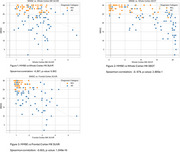 Figure 1
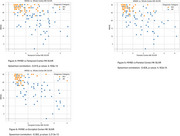 Figure 2
Peer Reviews
No public reviews on file for this paper yet. If you reviewed it on a platform where reviews are public (OpenReview, ICLR, NeurIPS, ICML), you can paste yours below so the community can read it here.
Videos
No videos yet. Explain this paper in a talk, walkthrough, or lecture? Add one.
Taxonomy
TopicsDementia and Cognitive Impairment Research · Functional Brain Connectivity Studies · Alzheimer's disease research and treatments